
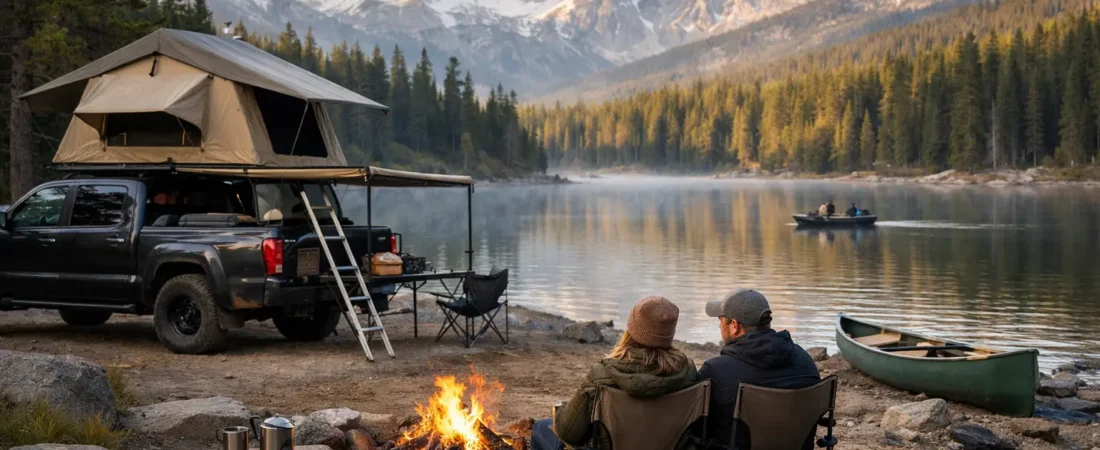
The best weekend camping trip ideas do not need a 400-mile drive, a giant gear pile, or a spreadsheet with color-coded backup plans. Sometimes the trip that sticks with you is one quiet night by the water, a slow morning with coffee in hand, and just enough time outside to remember that your phone does not need your constant attention.
We like a weekend that feels achievable. Load the truck after work, point it toward a lake, state park, forest road, or small-town campground, and let the plan stay a little loose. No plans. No scripts. Good times. Long clips. The goal is not to cram a week of adventure into 48 hours. It is to come home feeling like the weekend actually happened.
1. Camp by a Lake and Keep the Schedule Empty
A lake weekend works because everyone can find their own version of a good day. One person can fish from shore while somebody else paddles around a quiet cove or sits under an awning with a book. If you have a boat, it adds another layer to the trip, but it is not required. A folding chair near the water has solved plenty of stressful weeks.
Choose a campground with easy water access when you want convenience, or look for legal dispersed camping nearby if you are comfortable being more self-sufficient. Those are very different weekends. A campground usually means predictable access, restrooms, and neighbors. Dispersed camping can mean more space and better quiet, but you need to bring water, pack out trash, know the local rules, and have a backup if the road turns ugly after rain.
Our favorite lake days are usually the least complicated ones: launch early, fish a little, eat something simple, then watch the light change across the water before dinner.
2. Take a One-Night Truck Camping Reset
For a short trip, truck camping makes it easier to leave before you talk yourself out of it. With our Four Wheel Camper Project M on a Ram 3500 dually, a lot of the basics already live in the setup. That means less loading, fewer forgotten items, and more time for the part that matters – getting out of town.
You do not need a camper to borrow this idea. Pack your vehicle the night before, keep dinner easy, and choose a site within a couple of hours of home. The magic is in lowering the departure barrier. If getting ready takes all Saturday morning, the weekend has already started slipping away.
For one night, bring the things that make camp comfortable rather than every item you own. A good sleeping setup, water, light, a way to cook, warm layers, and a reliable camp chair beat a truck full of gadgets. Check the weather before you leave, especially in the Southwest, where a warm afternoon can turn into a windy, cold night fast.
3. Build the Weekend Around a Paddle
A kayak can turn a familiar place into a completely different trip. From the water, the noisy day-use area disappears behind you, the shoreline slows down, and birds seem to be doing more interesting things than they were from the parking lot.
A paddling weekend does require a little more planning than it first appears. Wind matters. Launch access matters. So does knowing whether the water is busy with boat traffic. For a relaxed outing, an early-morning paddle is usually the move. The water is often calmer, the heat is more reasonable, and you are back at camp in time for a late breakfast.
Keep the route modest. A weekend is not the time to prove you can paddle farther than everyone else. Pick a protected cove, a short river section with a known takeout, or a shoreline route that lets you turn around whenever the wind starts building. Wear a properly fitted life jacket, and bring more drinking water than you think you will need.
4. Go Fishing, Even if the Fish Win
Fishing gives a camping trip a rhythm without making it feel scheduled. You wake up early because the lake is calm. You spend an hour or two casting. Maybe you catch dinner, maybe you catch a branch, maybe you mostly watch the sun come up over the water. All three count.
For a simple fishing weekend, resist the urge to bring a tackle shop’s worth of gear. Take a rod you know how to use, a few dependable lures or bait options, a net if you need one, and the required license. Research the current rules for the water you are visiting, including species limits, seasonal restrictions, and whether live bait is allowed.
Fishing is especially good for mixed groups because nobody has to participate the same way. One person can be serious about it while another wanders the bank with coffee. The shared part is the quiet, plus the stories about the one that definitely would have been huge.
5. Pick a State Park Close Enough for a Friday Arrival
State parks are a strong answer when you want the outdoors without gambling on access. Reservations, established sites, and clear park rules take some uncertainty out of a short trip. That can be worth a lot when your only real window is Friday night through Sunday afternoon.
The trade-off is that popular parks can feel busy, especially during school breaks and fair-weather weekends. If solitude is the main goal, look for a smaller park, book a site away from the main loop when possible, or arrive with realistic expectations. A full campground can still be a good base camp if you spend the day hiking, paddling, or driving scenic backroads.
Before leaving, check site length, road conditions, fire restrictions, pet rules, and whether the park has water available. Those boring details are what prevent the late-arrival scramble.
6. Make a Scenic Drive the Main Event
Not every camping trip needs a destination hike or a long list of activities. A good scenic drive can be the whole plan, especially in places where the landscape changes every 20 miles. This works well for truck campers, overlanders, and anyone who enjoys the route as much as the campsite.
Build in room to stop. Pull over for a viewpoint. Take the side road that looks promising if it is legal and conditions allow. Grab lunch in a small town. Then find camp before dark instead of chasing one more overlook until you are setting up by headlamp.
Road conditions are the deciding factor here. Dry, graded dirt can be easy in the morning and miserable after a storm. Know your vehicle’s clearance, keep an eye on fuel, download maps before losing service, and do not let a cool-looking road turn into an expensive recovery lesson. There is no shame in turning around.
7. Try a Camp-Cooking Weekend
Sometimes we plan a trip around one meal. It sounds ridiculous until you are outside, the camp is set, something good is cooking, and suddenly dinner takes two hours because nobody is in a hurry. That is kind of the point.
Choose food that is fun but forgiving: tacos, burgers, foil-pack potatoes, chili made ahead at home, or a breakfast skillet with eggs and whatever needs using up from the cooler. Avoid making yourself wash six pans in the dark. A campsite meal should feel like a reward, not a kitchen shift.
If fire restrictions are in place, respect them and adjust. A camp stove can still make a great dinner. The important part is sitting down together after the sun goes down, not whether the meal came off a grill grate.
8. Camp Near a Trail, But Do Not Overbook It
A campsite near a trail gives your weekend an easy anchor. Hike in the morning, return for lunch, take a nap, then go back out for sunset if you feel like it. This works better than trying to knock out several major hikes while also setting up camp, cooking, and packing up.
Pick a route that matches the people coming along, the weather, and the amount of daylight you actually have. A short trail with a good view can be a better weekend choice than a bigger route that leaves everybody exhausted and racing back to camp. Bring navigation, sun protection, water, and a layer even for a short hike.
9. Create a No-Pressure Camp Weekend
The last of these weekend camping trip ideas is also the easiest to overlook: go somewhere simply to be there. No fishing goal. No mile target. No route to complete. Just camp, take a walk, make coffee, and watch the weather move through.
This is the kind of trip that works especially well after a packed stretch at work or too much time feeding the scroll. Put the phone away except for photos, maps, and safety. Let the evening be quiet enough that you notice the birds settling down, the wind in the trees, or the weirdly competitive campfire debate about how much wood is actually left.
A short camping trip will not fix everything waiting back home. But it can make space between you and the noise for a couple of days. Pick a place you can reach, pack what you need, leave a little daylight for setup, and let the rest of the weekend unfold at camp speed.