A good truck overlanding trip can start with a full tank, a weather check, and a loose idea of where you want to sleep. It does not need a 40-page route plan, a row of sponsor decals, or a creek crossing dramatic enough for a thumbnail. For us, truck overlanding is a way to make the drive part of the trip, carry what makes camp comfortable, and spend more time outside than staring at a phone.
That definition matters because the word “overlanding” can make an ordinary weekend sound like a major expedition. There is nothing wrong with remote routes and difficult terrain, but most of us are working with a few days off, changing weather, and a real need to be back home Monday morning. A truck that gets us to a quiet campsite, handles rough access roads sensibly, and lets us cook dinner without a production is doing exactly what we need it to do.
What truck overlanding really means
At its simplest, truck overlanding is self-supported travel by truck, with camping as part of the journey rather than an afterthought at the end. The destination can be a dispersed site, a state park, a forest road, a lake, or a stretch of public land reached by a long gravel road. The truck carries the gear, sleeping setup, food, water, recovery equipment, and power you need to stay out comfortably.
The “self-supported” part is worth taking seriously, especially when cell service fades. It means bringing enough water, keeping an eye on fuel range, knowing the limits of your vehicle, and having a backup plan when the road ahead is worse than expected. It also means leaving a place cleaner than you found it and not treating every quiet campsite like a content set.
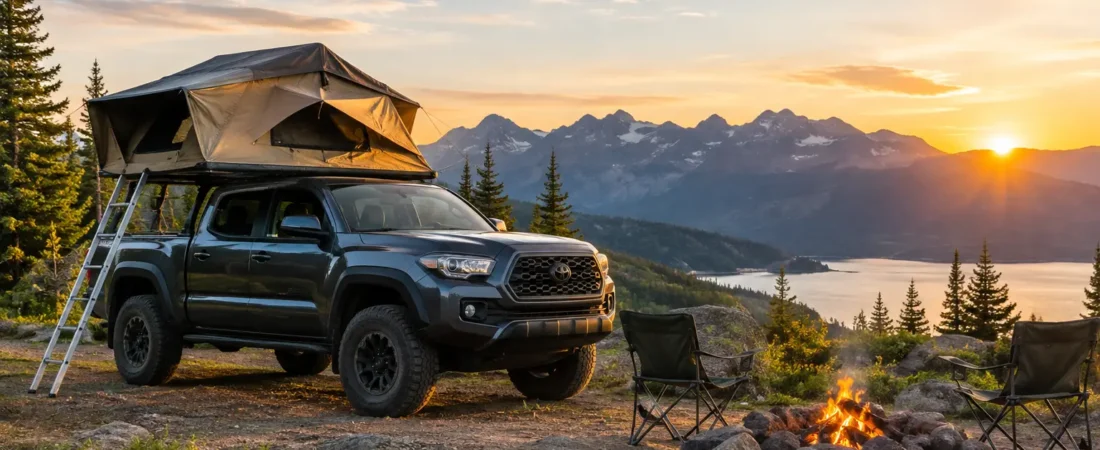
There is no one correct version of this. A midsize pickup with a ground tent can be an overlanding rig. So can a heavy-duty truck with a slide-in camper. The right setup depends on where you travel, how many people go with you, what you bring, and how much comfort helps you actually get outside more often.
Start with the truck you already have
The easiest way to make truck overlanding expensive is to believe every problem needs another accessory. Before adding lights, racks, suspension, or a fancy camp kitchen, take a few local trips and pay attention to what slows you down. Maybe the issue is poor organization. Maybe it is running out of power, struggling to air up after a rough road, or sleeping badly enough that nobody wants a second night.
A capable stock truck with good tires, basic recovery knowledge, a first-aid kit, drinking water, and sensible packing will take most people farther than they expect. The practical upgrades usually reveal themselves after real use. That approach also keeps the build from becoming a permanent garage project that never sees a campsite.
Weight is the part people tend to learn about later. Every cooler, tool case, battery, recovery board, drawer, and camp chair adds up. Payload, tire load ratings, braking, and suspension behavior deserve attention before the truck is loaded to the windows. Bigger is not automatically better, particularly on narrow roads, in soft ground, or when a tight turnaround is the only way out.
Our truck camper approach
Our main setup is a Ram 3500 dually carrying a Four Wheel Camper Project M. It is a very different tool from a small pickup build, but it fits the kind of travel we enjoy: bringing a comfortable camp with us while still being ready for long road days and rougher access roads when conditions allow.
The camper gives us a place to sleep and regroup without setting up a tent after dark. That sounds like a small convenience until the wind picks up, rain rolls in, or you pull into camp after a long drive. It also changes how we use short windows of free time. When camp is already on the truck, leaving for a weekend feels more doable.
The trade-off is obvious. A Ram 3500 dually with a camper is large, heavy, and not the vehicle we would choose for every narrow trail or technical obstacle. We plan around that reality. The goal is not to prove the truck can squeeze through every route. The goal is to get to good places, treat the truck well, and still have a relaxing camp once we arrive.
Build for comfort, then capability
Capability gets attention because it looks good in photos. Comfort is what often determines whether a truck gets used five weekends a year or twenty. A cold drink, reliable power, shade, a decent meal, and a dry place to sleep can make a basic campsite feel like the exact reset you needed.
Our power setup includes an EcoFlow Delta Pro 3, 600 watts of Renogy solar on the camper roof, and a Bluetti Elite 300. That kind of power capacity can support the things that make extended camping more comfortable, including our EcoFlow AC unit when conditions and power planning make sense. But batteries are not magic. Solar production changes with season, cloud cover, shade, and how the camper is parked. We still pay attention to what we are using instead of assuming a full battery will stay full forever.
Cooler space matters too. We use Dometic and Iceco coolers, which helps us keep food organized and avoid the soggy-ice-cooler routine. A good cooler is less glamorous than a winch, but it has a bigger impact on a long weekend than most people expect. Better meals mean fewer unnecessary drives into town and more time sitting outside when the evening finally cools down.
Shade and simple camp systems earn their keep quickly. An Alu-Cab Shadow awning gives us useful cover from hard sun or a passing shower, while a zero23 Rask shower adds a little comfort when we are out longer. Our LavaBox stainless steel propane fire pit is another practical camp item, especially where a contained propane fire is allowed and conditions call for extra caution. Always check local fire restrictions before lighting anything.
Recovery gear is not an invitation to get stuck
A truck with ARB air lockers, a Carbon Offroad Pro 20K winch, and good lighting has more options when traction or visibility gets difficult. Our Ram also has a Carli Full Dominator suspension, Baja Designs ditch lights, Rigid front bumper lighting, and Oracle rock lights. Each piece has a purpose, but none of it replaces judgment.
A locker can help you move through uneven terrain. A winch can help recover a vehicle. Extra lighting can make a dark setup or exit safer. But recovery gear works best when it is paired with training, proper recovery points, careful rigging, and the willingness to turn around before a small problem becomes an expensive one.
The least exciting decision is often the best one: stop, walk the section, assess the surface, and choose another route if needed. Mud, deep sand, washouts, snow, and steep off-camber roads can change fast. A truck that makes it home is more useful than a truck that wins an argument with a trail.
Plan the trip, but leave space for the good parts
Overplanning can squeeze the life out of a weekend. We like enough preparation to travel safely, then enough flexibility to follow a scenic road, linger by the water, or stay put when a campsite is too good to leave. That means downloading offline maps, checking road and weather conditions, packing water, and telling someone the general plan before heading into areas with limited service.
It also means accepting that the plan may change. A closed road is not a ruined trip. A windy afternoon is not a failure. Sometimes the best part of truck camping is cooking something simple under an awning while the weather does whatever it wants around you.
Our 2026 Jeep Wrangler Rubicon X and teardrop trailer will give us another way to travel as we continue building it for overlanding. We are also planning to flat tow the Jeep behind the Ram after finishing the Roadmaster Nighthawk and InvisiBrake installation. That combination should let us establish camp with the truck camper and use the Jeep for routes that do not make sense for the larger truck. Different rigs create different options, and that is the point.
The trip is better when the phone stays quiet
Truck overlanding does not have to be about covering huge miles or collecting difficult trails. It can be a two-night escape to a quiet patch of public land, a backroad route to a lake, or a state park where dinner tastes better because you cooked it outside.
Build the truck around the trips you honestly want to take. Pack thoughtfully, respect the land, and leave room for a wrong turn that becomes a better view. Stop feeding the scroll. Come camp with us and let your world slow down.