
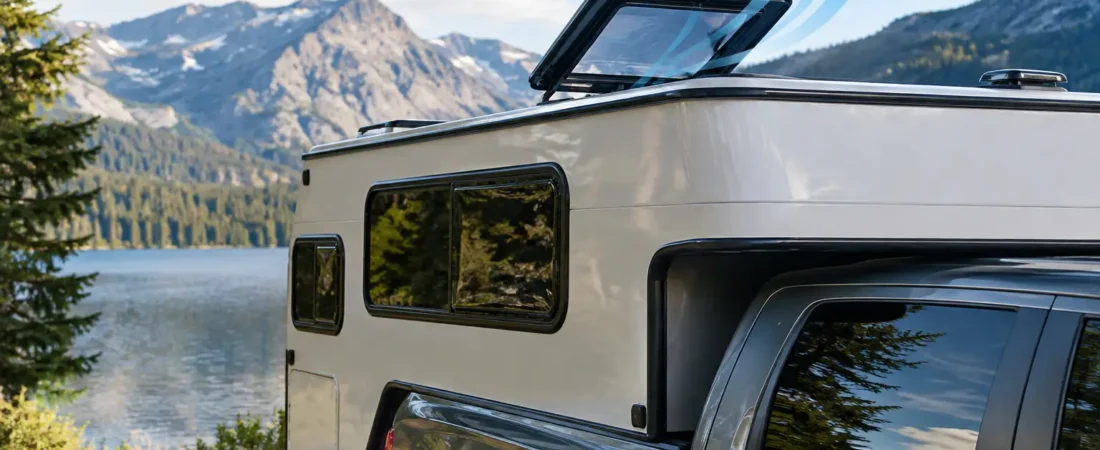
A closed-up truck camper can turn into a little weather system overnight. Two people breathing, wet jackets drying by the door, a pot of coffee on the stove, and a cool morning outside can put moisture on every window fast. Good truck camper ventilation is not glamorous gear talk, but it can be the difference between waking up rested and waking up damp, stuffy, and ready to blame each other for the fogged-up windows.
With a compact camper such as our Four Wheel Camper Project M, every cubic foot matters. There is not much distance between the kitchen, the sleeping area, muddy boots, and the roof. That is part of what makes a truck camper simple and comfortable in the right place, but it also means air needs a deliberate way in and out.
Why truck camper ventilation matters
Ventilation does more than cool things off on a hot afternoon. Its biggest job is moving humid, stale air outside before it settles on cold surfaces. Moisture comes from people, cooking, wet towels, dogs, and sometimes a rain-soaked camp setup. When warm interior air hits a cool window, wall, or roof panel, condensation forms.
A little moisture on the windows is common. Persistent moisture is where the annoyance starts. Bedding feels clammy, clothes never fully dry, and hidden corners can stay damp long after the trip is over. Even a dry-climate camp can produce plenty of interior condensation once the temperature drops at night.
Airflow also affects sleep. A camper that stays warm enough but feels stale can make a calm night feel surprisingly uncomfortable. On the other hand, opening everything wide in 35-degree wind can make a small camper miserable. The goal is not maximum airflow at all times. It is controlled airflow that fits the weather, how many people are inside, and what is happening in camp.
Create an airflow path, not just an open window
The most useful idea is simple: air needs an entrance and an exit. Cracking one window may help, but it often does not move much air on its own. A roof vent or powered roof fan can pull warm, humid air upward while a window or lower vent supplies replacement air.
That high-and-low path is especially helpful because warm air naturally rises. On a warm afternoon, opening a shaded window and exhausting through the roof can pull heat out of the camper. On a cold night, a small opening near the sleeping area plus a roof vent cracked open can reduce condensation without throwing away all the heat.
Which opening should be the intake depends on wind direction, rain, dust, smoke, and the camp layout. If smoke from a neighbor’s fire is rolling through, the “best” airflow pattern is the one that keeps it outside. If wind is pushing dust across a desert campsite, a wide-open window may create a cleaning project for later.
Powered fans are useful because they give you a choice. They can exhaust hot air while cooking or bring cooler air in during the evening. Passive roof vents can still work well, particularly when there is a temperature difference between inside and outside, but a fan gives more control when the air is still. The trade-off is power use and fan noise. A low setting is often enough overnight, and it is usually much easier to sleep with a quiet fan than with a damp camper.
Start with a small opening at night
Many new truck camper owners make an understandable mistake: they seal everything tight because it is cold outside. Then they wake up with wet glass and wonder where the water came from. Try a small roof-vent opening and crack a window just enough to create a path for air. If the weather allows, add a low fan setting.
It may feel backward to let cold air in when the heater is running. But a modest amount of fresh air can keep the interior drier and more comfortable than a warmer, sealed-up box. You may use a little more heat, but you are less likely to be wiping down windows and airing out bedding the next day.
Ventilation while cooking needs extra attention
Cooking adds heat and moisture quickly, especially in a compact camper. Boiling water, simmering pasta, and running a kettle can raise interior humidity faster than most people expect. If you are using a stove, open the roof vent or run the roof fan in exhaust mode, then crack a nearby window for makeup air.
That approach helps clear steam, but it also matters for safety. Any appliance that burns fuel must be used according to its manufacturer instructions. Never rely on a roof vent as a substitute for proper combustion safety, and keep working carbon monoxide and smoke alarms in the camper. If an alarm goes off, treat it as a real problem, get outside, and identify the cause before using the appliance again.
After cooking, leave the fan running for a few minutes. Steam does not disappear just because dinner is finished. Giving that humid air time to leave is easier than chasing condensation later.
Hot-weather airflow is about timing
On sunny days, a truck camper can heat up fast, particularly when it has been parked closed for a few hours. The best cooling move is often made before the camper gets hot. If you can safely leave a roof vent protected from rain and open a shaded window while you are nearby, heat has a place to escape.
Once the sun starts dropping, use the cooler evening air. Open opposing windows when conditions are clean and calm, then use a fan to pull air through the sleeping area. This is one of the small camp routines that makes a big difference when you are trying to settle in rather than hide inside scrolling at the end of the day.
If you use an air conditioner, ventilation still has a role. Keep windows and vents closed while cooling so you are not asking the unit to condition the whole campground. Then, when outdoor temperatures improve, shut the AC down and flush out the camper with outside air. Our truck-camper setup carries substantial battery and solar capacity, but even with power available, natural evening airflow is quieter and easier on the system.
Rain, dust, bugs, and smoke change the plan
Ventilation is not a set-it-and-forget-it routine. Rain calls for a vent cover or a carefully positioned opening. Bug screens are essential if you camp near water, woods, or anywhere the mosquitoes are feeling ambitious. Check screens regularly for gaps, especially around corners and zippers.
Dusty roads and wind can be trickier. In those conditions, keep the windward side mostly closed and use the most protected opening as your intake. A roof fan on low exhaust may be enough to maintain a little fresh air without coating every flat surface in grit.
Campfire smoke is another reminder that real camping does not always follow the perfect diagram. If the smoke shifts toward the camper, close up. You can vent later. Breathing clean air matters more than maintaining an ideal cross-breeze.
Keep moisture from building up after the trip
Ventilation does not end when the truck is pointed toward home. Once you unload food and gear, open the camper on a dry day and let it air out. Pull damp towels, coats, and bedding rather than leaving them packed inside. Check the lower corners, mattress area, window tracks, and any storage compartments where wet gear may have touched the walls.
If you see condensation regularly, do not just add a bigger fan and call it solved. Look at the whole routine. Are two people sleeping with every opening closed? Are you cooking without exhausting steam? Is wet gear coming inside each night? Sometimes the fix is a better vent setup. Sometimes it is hanging the rain jacket under the awning instead of next to the bed.
A simple hygrometer can help if you want real numbers rather than guesses. High humidity is not automatically a crisis, but a consistent reading that stays elevated overnight tells you the camper needs more airflow, less indoor moisture, or both.
Build a routine you will actually use
The best truck camper ventilation setup is the one that does not require a checklist taped to the wall. Before bed, crack the roof vent and a window. While cooking, run the exhaust. After a wet hike or paddle, get damp gear outside or give it a dedicated drying spot with airflow. In hot weather, vent early and use the cool hours well.
There will still be mornings with fogged windows and nights when wind, rain, or smoke means closing up tighter than you would like. That is camping, not failure. A few thoughtful adjustments keep a small camper feeling like a cozy base camp instead of a sealed plastic container. Then you can put the phone down, listen to the fan hum and the weather outside, and let the world slow down for a while.