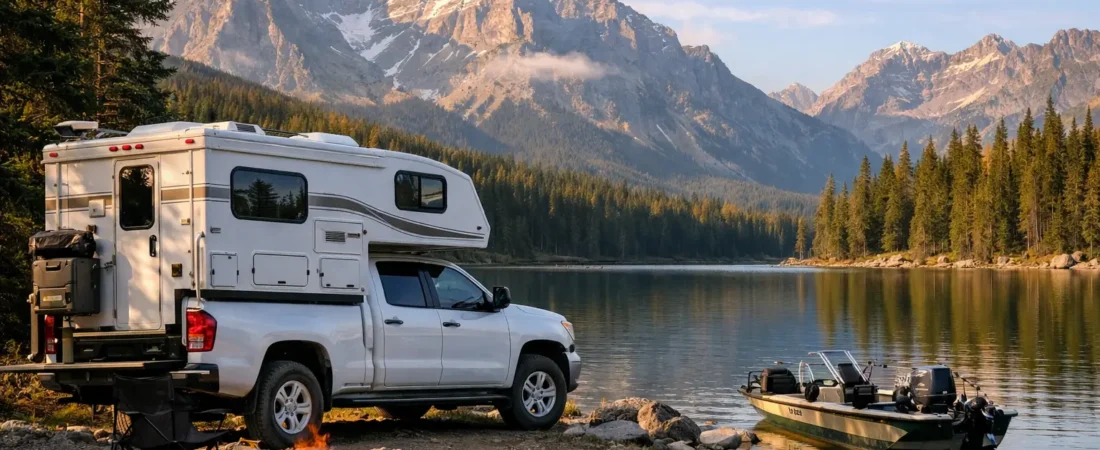
The best part of truck camper traveling is not that it turns every weekend into some massive expedition. It is that a normal Friday can become a camp dinner under the awning, a quiet sunrise, and a drive home with a little less noise in your head. The truck is already capable, the camper is already packed, and the whole setup asks fewer questions than a big trip usually does.
We travel with a Four Wheel Camper Project M on a Ram 3500 dually, and that combination has shaped the way we think about getting outside. It gives us a dry place to sleep, room for the gear we actually use, and the ability to take the slower roads when they make sense. It does not make every road a good idea, and it definitely does not eliminate the need to plan. That is part of the charm. A truck camper can make travel simpler, but only if you keep your expectations honest.
Why Truck Camper Traveling Feels Different
A truck camper sits in an interesting middle ground. You have more comfort and weather protection than tent camping, but you are still close enough to the outside world that the trip feels like camping. You can pull into a spot, make a meal, listen to the wind move through the trees, and be settled before dark without setting up a bunch of separate rooms.
The biggest benefit for us is flexibility. When the weather changes, a road is rougher than expected, or a camp spot does not feel right, we can move on without breaking down a large camp. That does not mean we chase a different location every day. Sometimes the best move is staying put for two nights, making coffee slowly, and taking a kayak or a fishing rod down to the water.
There is a trade-off, of course. A truck with a camper is tall, heavy, and wider than many people realize. Low branches, fuel station canopies, soft shoulders, and tight trailheads deserve more attention than they did before. The goal is not to drive it like a side-by-side. The goal is to get to a good place safely, then enjoy being there.
Start With the Truck, Not the Dream Route
Before planning a scenic backroad route, know the real limits of the truck and camper. Payload matters. Tire condition matters. So does the truck’s overall height, especially with rooftop solar, vents, or an awning. Write those numbers down somewhere easy to find. Guessing at a low bridge or a gas station clearance is a lousy way to add excitement to a trip.
Our Ram 3500 dually has Carli Dominator suspension and ARB air lockers, which give it useful capability for the kind of travel we enjoy. But capability is not permission to force a route. A heavy truck camper setup can get into trouble quickly on off-camber trails, wet ground, deep ruts, and narrow wooded roads. Recovery gear is there for when a careful decision still goes sideways, not as an excuse to take the sketchiest line.
We run a Carbon Offroad Pro 20K winch, and it is reassuring to have. Still, the better winch pull is the one you never need. Walk an obstacle if you are unsure. Check the ground after rain. Turn around while you still have room. There is no prize for getting pinned between trees because the map called a road a road.
Keep a realistic route plan
When building a route, think in layers. First, choose a destination or general area. Then identify a few possible camp options, fuel stops, and a paved exit route if weather goes bad. Finally, download maps before cell service disappears. A paper map can be a smart backup, too.
Leave room for the unexpected. A route that looks like three hours on a map can become five with fuel, groceries, photos, road construction, and a slow stretch of washboard. We would rather arrive early and take a walk than roll into camp tired, hungry, and trying to level the truck in the dark.
Build a Camper Setup Around Real Days Outside
The best truck camper setup is not necessarily the one with the most equipment. It is the one that supports the trips you actually take. If you mostly camp on long weekends, prioritize fast setup, easy meals, power for the essentials, and gear that is simple to put away. If you spend time in remote areas, water, recovery planning, communications, and electrical redundancy may move higher on the list.
Our power setup includes an EcoFlow DELTA Pro 3 and 600 watts of Renogy solar on top of the camper. We also carry a Bluetti Elite 300. That gives us options for running our daily gear and adapting to changing conditions, but solar is not magic. Tree cover, winter sun angles, cloudy weather, and short drives all affect how much power comes back into the system.
That is why it helps to understand your actual consumption before leaving home. A cooler, lights, camera batteries, phones, and a few small appliances add up. An air conditioner changes the conversation even more. We have an EcoFlow AC unit, but cooling off-grid depends on battery capacity, solar conditions, outside temperature, and how long you need it to run. It is worth testing a full camp-style day at home instead of learning your limits during a hot night away.
Cold storage deserves the same practical approach. We use Dometic and Iceco coolers, and a cooler system only works well if it is organized before the trip. Put often-used food where you can reach it without unloading everything. Bring meals that are forgiving. A simple breakfast and one solid dinner plan can be better than hauling ingredients for a cooking show you will be too tired to film.
Make camp comfortable without making it complicated
A few pieces of gear can make a basic site feel like a place you want to stay. Our Alu-Cab Shadow awning creates quick shade, which matters a lot in the Texas heat. The Zero23 Rask shower is useful when conditions allow, especially after dusty roads or time on the water. And a LavaBox stainless steel propane fire pit can add that campfire feeling where local rules allow propane fire features.
The key phrase is where rules allow. Fire restrictions, dispersed camping rules, seasonal closures, and local requirements can change. Check official information for the area before every trip, and arrive ready to skip the fire if conditions call for it. Camp comfort should never come at the expense of a burned-up landscape or a bad situation for the people around you.
The Little Habits That Save a Trip
Truck camper travel gets easier when a few small jobs become routine. Check your tie-downs and walk around the truck at fuel stops. Look for tire damage, loose gear, leaking water, or anything that seems different than it did that morning. It takes two minutes and can prevent a much longer roadside problem.
We also like to keep the outside of camp as simple as possible. Bring out what you need, then put it away when you are done. It keeps things cleaner, reduces the chance of leaving something behind, and makes a quick weather move far less stressful. A loose camp chair has a special talent for becoming a sail at exactly the wrong time.
Water is another easy place to get complacent. Carry enough for drinking, cooking, washing up, and a little margin. How much is enough depends on the weather, number of people, trip length, and whether reliable refill points exist. In hot, dry country, the answer is usually more than you first think.
Let the Destination Set the Pace
A camper can make it tempting to cover a lot of ground because moving camp is relatively easy. But a good trip is not measured by the number of pins saved on a map. Sometimes the best plan is driving less, sitting outside longer, and noticing what you would normally scroll past.
That can look like launching a BOTE kayak at a calm lake in the morning, cooking dinner before the wind picks up, or taking the Jeep down a nearby route only after confirming it suits the conditions. We are building our Jeep Wrangler Rubicon X for overlanding and plan to flat tow it behind the Ram once the Roadmaster Nighthawk and InvisiBrake system are installed. That will add another layer of flexibility, but it will not replace the simple rule that makes every setup better: do less, but be present for it.
Truck camper traveling works when the truck is prepared, the route matches the rig, and camp stays simple enough to enjoy. Stop feeding the scroll. Pick a direction, give yourself an extra hour, and come camp with us while your world slows down.