The honest version of this Project M review is that it has changed how often we actually go camping. Not because it turns every trip into an expedition, and not because it removes every compromise. It works because it is ready when a free weekend shows up, whether that means heading toward a quiet lake, finding a spot in the West, or simply getting out of the house long enough to remember what a campfire sounds like.
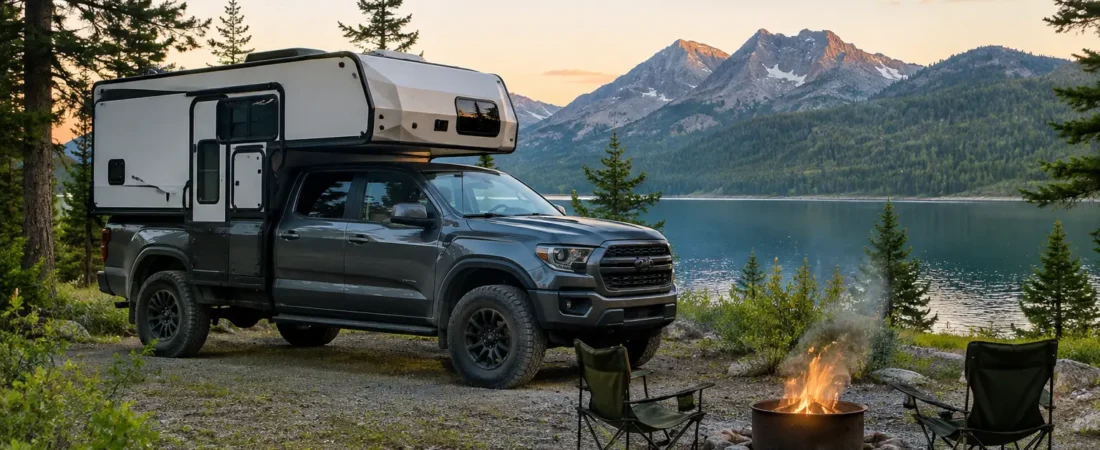
We camp with a Four Wheel Camper Project M mounted on a Ram 3500 dually. Our truck is built to carry the load and handle the kind of roads we enjoy, with Carli Full Dominator suspension, ARB air lockers, a Carbon Offroad Pro 20K winch, extra lighting, and a few other upgrades that make sense for our setup. But the Project M is still the part that makes the whole rig feel like a camp setup rather than just a truck with a lot of gear bolted to it.
What the Project M Is Good At
The Project M is a slide-in, pop-up truck camper built around keeping the truck bed useful while adding a protected place to sleep. The pop-up design matters more than it may seem in photos. With the roof down, the truck is lower profile than a hard-sided camper and generally easier to live with on the road. With the roof up, the sleeping area feels far less cramped than most people expect.
That low profile is a big reason this setup works for us. We can cover road miles without feeling like we are hauling a small apartment behind us, then pull into camp and have a comfortable place to sleep without a long setup routine. There is no trailer to back into a tight site, no separate campground reservation required just to make an overnight feel worth it, and no need to unload a pile of bins before bedtime.
The Project M also keeps the experience simple. You are still close to the weather, the sounds outside, and the place you came to see. Rain on the soft-sided pop-up section is part of the experience. So is waking up with enough headroom to sit up, make coffee, and look out at whatever view you earned by taking the less busy road.
Our Project M Review From the Road
Our camper is not a bare-bones sleep platform, but it is not trying to be a luxury RV either. We have built the rest of the truck around how we camp. Power comes from an EcoFlow Delta Pro 3, supported by 600 watts of Renogy solar panels on top, with a Bluetti Elite 300 also available in the mix. That lets us run the practical things that make longer trips more comfortable, including coolers, charging gear, lights, and our EcoFlow AC unit when conditions call for it.
Power is one area where every Project M build will look different. A weekend traveler who mostly chases mild weather may need very little beyond lights and device charging. Someone camping through a Texas summer will think about power, shade, airflow, and cooling much sooner. The camper itself can be the same, but the experience depends heavily on what you bring to support it.
For food, we use a Dometic cooler and an Iceco cooler depending on the trip. That arrangement gives us flexibility, especially when one cooler needs to handle drinks or ice while the other protects the food we do not want swimming in melted water. Outside living helps too. Our Alu-Cab Shadow awning creates a usable patch of shade, and the Zero23 Rask shower is one of those items that sounds optional until you have spent a hot, dusty day outside.
At camp, the Project M becomes the sleeping room and gear hub. The rest of life spills outside, which is honestly where we want it. Cooking under the awning, sitting around the LavaBox stainless steel propane firepit, listening to the lake settle down after dark – those are the parts we remember. The camper gives us a dry, secure reset button when the weather turns or the day catches up with us.
The Trade-Offs Are Real
A Project M is not for someone who wants to spend all day inside. The interior is intentionally compact, and that is part of the deal. You get a lighter, lower-profile camper with a useful truck bed, but you do not get a huge lounge, a full indoor kitchen, or the kind of standing-room comfort a large hard-sided camper can provide.
The pop-up section also asks you to pay attention to weather. Wind, cold, heat, and heavy rain feel closer than they would in a fully insulated hard-wall camper. That is not automatically a bad thing. It just means your trip planning matters. Good bedding, proper ventilation, shade, and a realistic view of the forecast go a long way.
Heat is probably the question we hear most often for southern camping. A pop-up camper can get warm, especially when it is sitting in direct sun. Our power setup gives us options, but no portable air-conditioning plan makes poor campsite selection irrelevant. Shade, time of day, airflow, and knowing when it is smarter to camp near water or wait for cooler weather all matter.
Storage is another trade-off. The Project M lets us carry more than a tent setup, but it rewards organization. If every item has no home, the truck bed can become a game of moving five things to reach one thing. We have learned to think in zones: sleep gear, kitchen gear, recovery gear, power gear, and the everyday items we grab constantly. It is not glamorous, but it saves a lot of frustrated digging around at dusk.
Who This Camper Makes Sense For
The Project M makes the most sense for people who want their truck to remain a truck. That might be someone who needs bed access between trips, someone who prefers a lower center of gravity, or someone who wants to travel farther down rougher roads without carrying a huge camper box above the cab.
It is also a strong fit for couples and small families who spend most of camp time outside. If your ideal evening involves cooking under an awning, walking down to the water, fishing from shore, or sitting around a fire, the smaller interior is not much of a penalty. It is simply where you sleep and recharge.
It may be less appealing if you regularly camp in harsh winter weather, need a full indoor bathroom, or want to work and lounge inside for long stretches. There is nothing wrong with wanting those things. It just points toward a different kind of camper. The best setup is the one that fits the trips you truly take, not the trips you imagine taking once a year.
A Dually-Specific Note
Our Ram 3500 dually gives us a stable platform and plenty of confidence carrying our build, but a dually is not the right answer for everyone. It is wider, and that width is noticeable at fuel pumps, in parking lots, and on narrow trails. The Project M can work across a range of truck platforms, so buyers should think carefully about payload, bed size, and where they plan to drive before copying anyone else’s rig.
Our build reflects our priorities: comfortable off-grid camping, enough power for our needs, and confidence on rough roads. Yours might put more value on a lighter truck, simpler electrical gear, or leaving room to bring a kayak, fishing gear, or a bike. That flexibility is one of the better parts of starting with a Project M.
Is the Project M Worth It?
For us, the value is not measured only in features. It is measured in how easy it is to say yes to a trip. The camper is already on the truck. The power system is ready. The awning, coolers, recovery gear, and camp basics have their places. When we have a few open days, we can spend less time packing and more time headed somewhere.
That matters because outdoor time rarely arrives in a perfect, wide-open calendar. Sometimes it is a planned road trip. Sometimes it is one quiet night near the water before Monday shows up again. The Project M helps make both feel possible.
If you are considering one, be honest about your comfort level, your climate, your truck, and how you camp. Then leave a little room for the unplanned stops, the slow mornings, and the evenings when you put the phone away and let the world get quiet for a while.