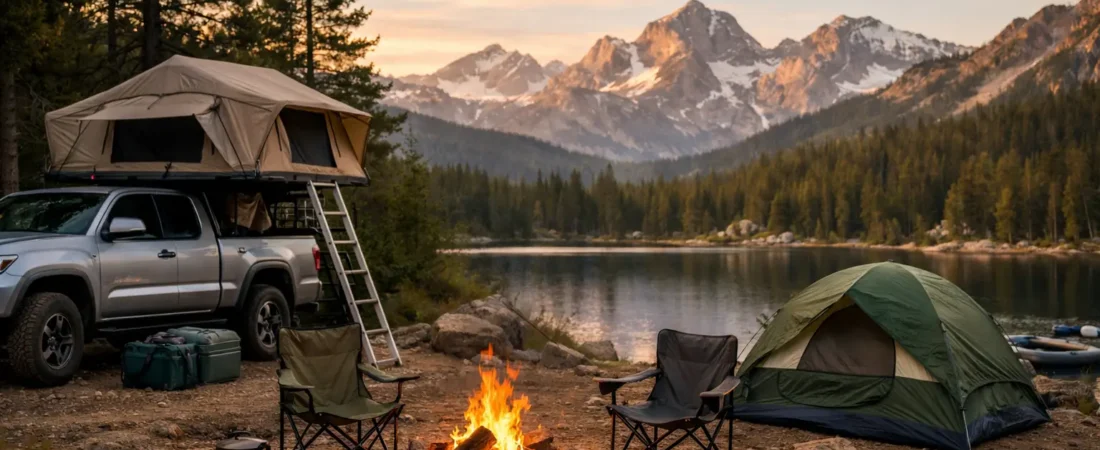
Pulling into a quiet patch of public land, shutting off the truck, and realizing there is nobody parked ten feet away can feel like the whole point of getting out there. But dispersed camping for beginners is less about finding a secret spot and more about being prepared enough to enjoy the quiet without creating a problem for yourself or the next camper.
It is camping outside a developed campground, usually on public land where it is allowed. There may be no picnic table, no trash can, no water spigot, no host, and sometimes no cell service. That freedom is great. It also means you are the camp host, maintenance crew, weather watcher, and cleanup crew all at once.
For people who want to trade screen time for a slower weekend, it is one of the simplest ways to make a regular trip feel bigger. You do not need an extreme overland build or a color-coded gear room. You do need a little planning, a realistic vehicle plan, and the willingness to leave a place looking like you were never there.
What dispersed camping actually means
Dispersed camping is generally permitted camping outside designated campgrounds on certain public lands, including some areas managed by the Bureau of Land Management and the U.S. Forest Service. The word “some” does a lot of work here. Land boundaries, seasonal closures, fire restrictions, stay limits, road conditions, and camping rules can change from one district to the next.
That means a wide open road does not automatically equal a legal campsite. A pullout may be private property, a closed area, a wildlife-sensitive zone, or simply too close to water or a road. The goal is not to find the most hidden spot possible. The goal is to find a legal, durable site where camping will not damage the land.
The experience also varies by region. In the Southwest, dispersed sites may be exposed, dusty, and spread across open desert. In forested parts of the West, they can be tucked along rough roads beneath the trees. Texas has far less federal public land than many western states, so legal dispersed options can take more research than a quick glance at a map. No matter where you travel, check the managing agency for the exact area before heading out.
Dispersed camping for beginners starts before the drive
The best camp setup is usually decided at home, not after dark on a rutted road with one bar of service. Start by identifying who manages the land. Then confirm whether dispersed camping is allowed, whether permits are required, how long you can stay, and whether there are current fire or road restrictions.
For national forests, a Motor Vehicle Use Map can be especially useful. It helps show which roads are open to which types of vehicles and where roadside camping may be allowed. Agency maps, ranger district information, and current alerts are more reliable than an old pin dropped in a camping app. Apps can be helpful for ideas, but a popular pin may lead to a closed road, a trashed site, or somebody’s private driveway.
Download maps before you lose service. Save more than one route in case a road is blocked, washed out, or much rougher than it appeared online. A paper map is still worth having. Batteries die, phones overheat, and map apps occasionally develop a sense of humor at exactly the wrong time.
Also set a turnaround rule. If the road gets narrower, softer, steeper, or more damaged than your comfort level allows, turn around while turning around is still easy. A capable four-wheel-drive truck or Jeep can go farther than many vehicles, but it cannot make a tight turnaround appear in a forest of pinstripes and low branches. Bigger rigs need even more margin. The right campsite is not worth a stuck truck, trailer damage, or a long reverse downhill.
Pick a site that is already durable
When you arrive, look for an existing campsite rather than creating a new one. Signs of a durable site include a clearly established pull-in, compacted ground, and an existing fire ring where fires are currently allowed. Do not drive over vegetation to make your own circle, move rocks to build furniture, or widen a site for a better view.
Keep a respectful distance from other campers. Dispersed camping is quiet partly because people give each other space. If you can see another group’s camp clearly, hear their conversation, or smell their bacon cooking, keep looking if the area allows it.
Water changes the equation. Camping close to a creek or lake might sound perfect, but it can harm shoreline vegetation, affect water quality, and put you at risk if weather changes. Follow the local distance requirements, which vary by agency and area. Avoid low spots and dry washes too. A dry wash can become very not dry during a storm miles away.
Before you set up, look up. Dead branches, leaning trees, loose rocks, and flash-flood terrain are all reasons to choose another spot. The view can wait. A safe place to sleep is the better souvenir.
Bring what developed campgrounds normally provide
A campground hides a lot of conveniences in plain sight. Dispersed camping puts them back on your packing list: water, toilet planning, trash storage, power, shelter, navigation, and a way to handle minor repairs.
Water is the first thing to solve. Bring more than your drinking water estimate because cooking, dishes, hand washing, pets, and hot weather add up fast. A simple baseline is at least one gallon per person per day, then add a buffer for your trip and conditions. In hot desert country, that baseline may not be enough.
For power, the needs depend on how you camp. A phone, headlamp, and small battery bank require very little. A truck camper setup with refrigeration, lights, fans, and other comforts needs a more deliberate plan. Portable power stations and solar can make longer stays easier, but shade, clouds, short winter days, and heavy use can change the math quickly. Start with conservation before assuming more battery capacity fixes everything.
Your first few trips should include these essentials:
- Enough water, food, and fuel for the planned stay plus an extra day
- Offline maps, a paper backup, and a fully charged communication device
- A first-aid kit, basic tools, tire repair gear, and an air compressor if you travel rough roads
- A trash system that keeps food scraps and odors contained
- A toilet plan, including a portable toilet or the supplies and knowledge to dispose of human waste properly where permitted
That last point matters more than most people want to admit. There is no magical forest cleanup crew. If there is no restroom, you need a plan before nature calls. Local regulations should lead the way, especially in high-use areas where packing out waste may be required.
Fire is optional. Fire safety is not
A campfire is not a requirement for a good camp. During dry periods, it may be prohibited, and even when it is allowed, wind can make it a bad idea. Check restrictions immediately before leaving and again when you arrive. Conditions can change fast.
If fires are allowed, use an existing fire ring where one exists, keep the fire small, and never leave it unattended. Do not burn cans, foil, food, plastic, or treated wood. Before bed or departure, put the fire out with water, stir the ashes, and repeat until everything is cool to the touch. “Mostly out” is not out.
A propane fire pit can be a useful alternative where allowed, but it is not automatically permitted during every restriction. Read the current order for the area instead of relying on what was allowed last season. A warm jacket, good camp chair, and a sky full of stars work surprisingly well when flames are off the table.
Respect the place after the fun part
Leave No Trace is not a slogan for a bumper sticker. It is the practical system that keeps dispersed camping from getting closed down. Pack out every bit of trash, including bottle caps, twist ties, food scraps, dog waste, and broken gear. Do not leave firewood, chairs, rugs, or “free” supplies for the next person.
Keep noise low, especially at night. Watch wildlife from a distance and secure food. Do not feed animals, even if a chipmunk makes a very convincing case. And skip posting precise location details for fragile, crowded, or little-known places. Sharing the feeling of a trip is great. Sending a flood of traffic to a vulnerable site is another thing.
A final walk around camp is worth the two minutes it takes. Look beneath the truck, around the fire ring, in the grass, and at the spot where you cooked. If you can leave the site cleaner than you found it, you did more than have a good weekend. You helped keep the next quiet pullout available for someone else who needs to stop feeding the scroll, sit outside for a while, and let the world slow down.