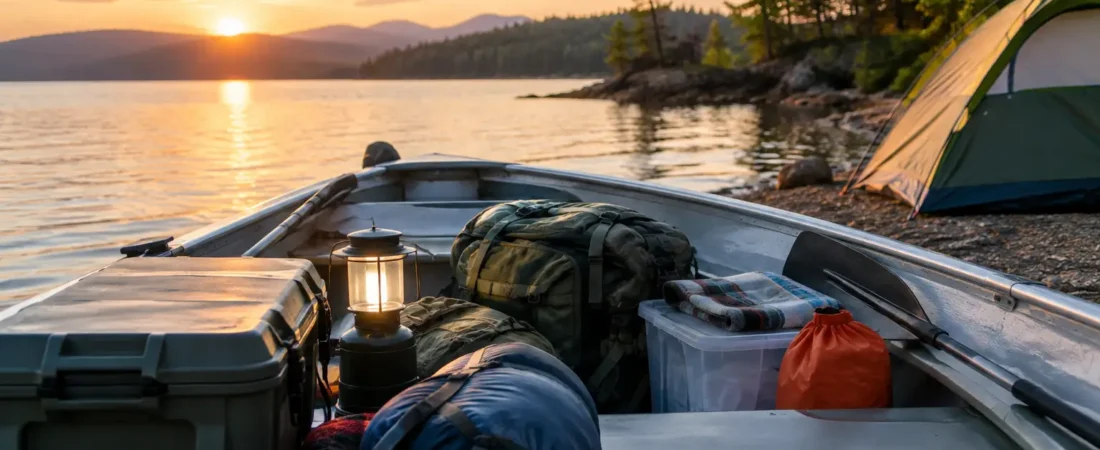
A quiet cove can make a regular lake day feel like a whole different trip. Once the sun drops, though, the fun part is only fun if you planned for the basics. This boat camping essentials checklist is built for the practical stuff that keeps an overnight on the water safe, comfortable, and pleasantly low-drama.
Boat camping looks different depending on the boat, the lake, the weather, and whether you are sleeping aboard, setting up on shore, or using the boat as basecamp. Our Manitou XT Tritoon is how we spend plenty of Texas lake days, and it has made one thing clear: space disappears fast on the water. Pack for the conditions, not for every possible scenario, and keep the gear you may need quickly where you can actually reach it.
Start With the Overnight Plan
Before loading coolers, chairs, and half the garage, decide what “boat camping” means for your trip. Some people sleep on a boat designed for it. Others anchor nearby and camp legally on shore. A third option is a long evening on the boat followed by a nearby campsite or cabin. Those plans need very different gear.
Check the rules for the lake, shoreline, marina, and land manager before you leave. Overnight anchoring, beaching, fires, alcohol, quiet hours, and shore access can all be regulated differently. Water levels also matter. A sandy point that looks perfect at lunchtime can be muddy, exposed, or gone by morning.
Your weather window deserves as much attention as your packing list. Wind can turn a calm anchorage into a rough, sleepless night, especially on open Texas lakes. Watch for thunderstorms, shifting wind direction, overnight temperature drops, and any chance of fog. If the forecast is questionable, the smartest piece of gear is often a backup plan on land.
Safety Gear Comes Before Camp Gear
It is easy to get focused on dinner and sleeping bags, but safety equipment is what earns the first storage spot. Carry required safety gear for your boat and local waters, make sure it is accessible, and check it before departure instead of assuming it is still where it belongs.
For an overnight trip, the core safety loadout should include:
- Properly fitted life jackets for every person, plus any required throwable flotation device
- Navigation lights, a flashlight or headlamp, and spare batteries
- Sound-producing device, first-aid kit, fire extinguisher, and visual distress gear where required
- Anchor, adequate anchor line, dock lines, and a backup plan if the anchor will not hold
- Charged phone, marine radio or satellite communicator when appropriate, and a waterproof way to carry them
- Basic tool kit, spare fuses, tape, knife, and a small emergency repair kit
A headlamp is one of those little items that earns its place every time. It helps with lines, coolers, bathrooms, and finding the one thing that rolled under a seat after dark. Choose one with a red-light mode if possible. It is easier on everyone’s eyes and less likely to ruin your night vision.
Do not depend entirely on your phone for navigation. Download offline maps before heading out, know the route back to the ramp, and learn the major hazards on that body of water. A familiar lake can look surprisingly unfamiliar when shoreline lights are scattered across the water and the wind is pushing you off course.
The Boat Camping Essentials Checklist for Shelter
Sleeping arrangements are where the trade-offs show up. On a pontoon or tritoon, an open deck has room to stretch out, but it also leaves you exposed to bugs, dew, wind, and early sun. A shore camp offers more comfort and privacy, but it means moving gear by boat and confirming that camping is permitted.
If you are sleeping on shore, bring a tent suited to the expected weather, sleeping pads, sleeping bags or quilts rated for the real overnight low, and a ground tarp. Add a small camp pillow if you want better sleep without giving up much space. Inflatable gear packs down well, but inspect it before the trip. A slow leak at 1 a.m. is not a personality-building experience anyone needs.
For sleeping aboard, focus on a dry, protected setup. A fitted boat enclosure, bug netting, or a carefully secured shade solution can make a huge difference, but do not block ventilation or create a setup that becomes unsafe in wind. Keep bedding in waterproof bags until you are ready to use it. Lake dew has a talent for finding every unprotected blanket.
A compact tarp and a few adjustable straps are useful whether you sleep on land or aboard. They can create shade, cover gear during a brief shower, or help keep a changing area a little less awkward. Just make sure nothing is tied in a way that interferes with safe operation, access to safety gear, or the ability to leave quickly.
Food, Water, and a Cooler That Works
A good boat meal does not need to be complicated. It does need to be manageable in limited space, with limited cleanup, while the boat is moving or rocking. Prep as much as possible at home. Pre-cut vegetables, marinate protein, portion snacks, and pack meals in containers that stack.
Bring more drinking water than you think you will use. Hot lake days, salty snacks, swimming, and sun exposure add up quickly. Separate drinking water from cleaning water when possible, and keep both easy to access. If your route includes a marina, treat it as a convenience, not a guarantee.
A quality cooler helps, but organization matters just as much. We use Dometic and ICECO coolers in our broader outdoor setup, and the lesson carries over to the boat: pack by meal and by frequency of use. Ice, drinks, and snacks should not be buried under tomorrow morning’s breakfast. Keep raw food sealed, use a thermometer if you are packing perishables, and avoid leaving the lid open while everybody decides what they want.
For cooking, choose the simplest setup that fits the rules and conditions. A compact stove can be great on a stable shoreline setup. On a boat, cold meals, sandwiches, wraps, fruit, and pre-cooked food may be the safer and easier choice. Never use a grill, stove, or firepit where the manufacturer instructions, marina rules, or fire conditions say not to.
Pack reusable plates and cups if that works for your crew, but bring trash bags either way. One bag for trash and another for wet or messy items keeps the boat from becoming a floating junk drawer by breakfast.
Power, Light, and the Things That Stay Dry
Overnight power needs can be modest. Phones, lights, a fan, and a small speaker are usually plenty. Bigger power stations are useful for established camp setups, but they are heavy, take up valuable room, and need protection from spray and rain. If you bring one, secure it low, keep it dry, and understand its limits before leaving the dock.
For most trips, a couple of charged power banks and rechargeable lanterns are the easy answer. Use warm, low-output lighting around camp. Bright white lights attract bugs, kill the relaxed mood, and make it harder to see beyond the boat.
Dry bags are not optional clutter. Use them for clothing, bedding, electronics, towels, and anything that will be ruined by a little water. Bring one smaller dry bag for your phone, keys, wallet, and identification while swimming or loading gear. It is much easier than searching the boat floor after someone shakes out a wet towel.
Comfort Gear That Actually Earns Its Space
Comfort is not about turning the boat into a luxury suite. It is about bringing the few things that keep people happy enough to stay outside longer. Camp chairs, a light blanket, towels, sunscreen, bug spray, sunglasses, and a simple shade option make a bigger difference than random gadgets.
In warmer parts of the country, bugs and heat can be the trip-makers or trip-breakers. Bring insect repellent, after-bite treatment, sunscreen, and a small fan if your power plan allows it. In cooler seasons, add dry layers, rain gear, and a beanie. Temperatures near the water can feel colder than the forecast suggests once the breeze starts moving.
A portable toilet or waste system may be worth considering when facilities are far away, but it depends on your destination and group. If you use one, bring supplies to manage it responsibly and follow disposal rules. For shore camping, leave the site cleaner than you found it. Nobody wants their favorite cove to become off-limits because people treated it like a private backyard.
Load the Boat Like You Plan to Use It
The last part of this boat camping essentials checklist is not a piece of gear. It is how you load. Keep heavier items low and centered, avoid blocking walkways, and secure loose gear before you leave the ramp. A rough crossing can turn an unstrapped cooler or chair into a problem fast.
Put arrival items together: anchor gear, dock lines, lights, bug spray, and the first round of food. Put sleep gear together in another dry bag or tote. Keep emergency gear separate and clearly accessible. If you need it, you should not have to unload half the boat to find it.
The best boat-camping nights are usually the simple ones: a safe spot, an easy meal, a calm stretch of water, and nowhere else you need to be. Stop feeding the scroll. Pack what matters, watch the weather, and give the lake enough time to slow the whole crew down.