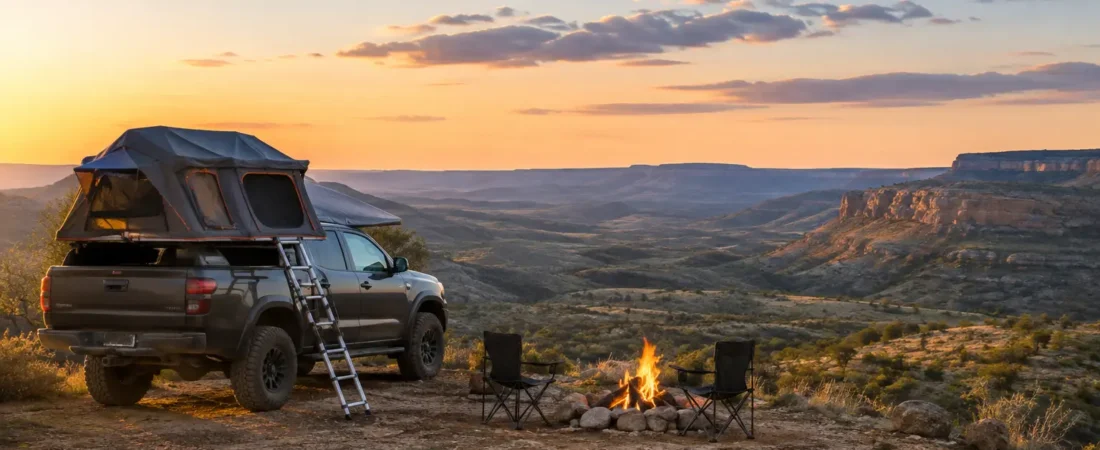
West Texas camping is not the kind of trip you squeeze between a late breakfast and dinner reservations. The distances are real, the sky feels oversized, and cell service can disappear right when someone asks, “So… where exactly are we?” That is part of the deal. This corner of Texas rewards people who slow down, carry what they need, and leave room for a plan to change.
For us, that slower pace is the whole point of getting outside. A truck camper, a cooler stocked before the pavement ends, and a few days without constantly checking a screen can reset a weekend in a way a busy itinerary never will. West Texas does not need much help to feel memorable. It just asks for better preparation than most easy campground trips.
Why West Texas Camping Feels Different
The landscape is the obvious draw. Desert plains, mountains, canyons, volcanic rock, dark skies, and long two-lane roads all share the same region, sometimes within a single day’s drive. But the thing that sticks with most people is the space. There is room between towns, room between campsites, and room to hear yourself think.
That space comes with a trade-off. Services are limited outside the larger towns, weather can turn quickly, and a route that looks short on a map may take much longer on washboard, gravel, or rough dirt. West Texas is not difficult just for the sake of being difficult, but it does not reward rushing.
A good trip can be as simple as setting up camp, making dinner before sunset, and watching the light change on the hills. There is no prize for covering every scenic road in a weekend. In fact, trying to do too much is one of the fastest ways to turn a relaxing trip into a long day of fuel stops and windshield time.
Choose Your Kind of West Texas Camping
The right basecamp depends on how much solitude, comfort, and road challenge you want. There is no single best option because a quiet tent site, a truck camper spot, and a developed campground all solve different problems.
State and National Park Campgrounds
Developed campgrounds are a smart starting point for campers who want known boundaries, designated sites, and at least some nearby facilities. Big Bend National Park, Big Bend Ranch State Park, Davis Mountains State Park, and Balmorhea State Park are often part of a West Texas route for good reason. Each offers a very different setting, from desert river country to higher-elevation mountain views.
Reservations and seasonal conditions matter. Popular periods can fill up, while heat, wind, or cold nights can change what feels comfortable depending on the time of year. Check the current park rules, road conditions, permits, fire restrictions, and reservation requirements directly before committing to a route. Conditions in this part of Texas are not something to guess at from an old social post.
Dispersed and Primitive Camping
Primitive camping can provide the quiet, wide-open version of West Texas that many people picture. It can also mean no water, no toilet, no trash service, no cell signal, and no easy turnaround if you bring a large rig down the wrong road.
Before using any dispersed or primitive site, confirm that camping is allowed on that specific public land and learn the local rules. Land ownership changes quickly in Texas, where much of the land is private. A dirt road, an empty horizon, and a gate do not automatically mean public access. Stay on legal routes, respect closures, pack out every bit of trash, and leave a site looking like nobody was there.
A Small-Town Basecamp
Sometimes the practical move is camping near a West Texas town and taking day trips from there. That can make resupplying easier, give you access to fuel and ice, and reduce the pressure to carry every possible thing. It is also a good approach for families or anyone new to desert travel.
The trade-off is that a town-adjacent campground may not offer total silence. Still, being able to grab a forgotten propane bottle or a bag of ice is not a failure of the adventure. It is just good planning.
The Gear That Matters More Than Fancy Gear
West Texas has a way of making basic equipment feel very valuable. Water storage matters more than a complicated camp kitchen. A dependable spare tire matters more than a pile of accessories. Shade can matter more than nearly anything by midafternoon.
A truck-camper setup can work especially well here because it keeps camp compact and makes it easier to move when weather or road conditions call for a change. We run a Four Wheel Camper Project M on a Ram 3500 dually, and a self-contained setup like that is built around the kind of simple goal West Texas suits: get out, settle in, and stay comfortable without needing a full campground hookup.
Power can be useful, but it should support the trip rather than turn camp into a tiny living room full of cords. Solar, a portable power station, and a cooler can make longer stays more comfortable. They do not replace water, food, recovery planning, or a realistic understanding of the road ahead.
Before leaving pavement, make sure these basics are handled:
- Carry more drinking water than you think you will need, plus extra for cooking and cleanup.
- Start with a full fuel tank and know where the next reliable fuel stop is.
- Bring a paper map or downloaded offline maps, not just a route saved in an app.
- Check tire condition and pressure, and carry a usable spare with the tools to change it.
- Pack layers for sun, wind, and surprisingly cold desert nights.
That last one catches people off guard. A hot afternoon does not guarantee a warm evening, especially at elevation. A light jacket, rain layer, and warm sleep setup earn their place even when the forecast looks friendly.
Roads, Weather, and the Art of Turning Around
A capable vehicle helps, but it is not permission to force a bad road. High-clearance roads can become rougher after rain. Loose surfaces, washouts, sharp rocks, and narrow routes can turn a casual detour into a long recovery problem. Larger trucks and campers need extra attention to turning radius, overhang, width, and soft shoulders.
We like the idea of being prepared enough that turning around is never embarrassing. If a road gets rougher than expected, if a storm is building, or if you cannot tell where the legal route continues, backing out is the right call. The view is not going anywhere.
Wind deserves its own mention. It can turn a peaceful lunch into a chase scene involving camp chairs, paper plates, and somebody’s hat. Secure awnings carefully, avoid leaving gear unattended, and be willing to pack shade down when gusts build. An awning is great until it becomes a sail.
Flash flooding is another reason to pay attention to weather, even when the ground around camp looks dry. Avoid camping in washes and low spots, and do not drive through moving water. Desert weather can be local and dramatic.
Make the Evenings the Destination
The best part of a West Texas trip often begins after you stop driving. Build camp with enough daylight left to make dinner without rushing. Sit outside. Watch the temperature drop. Let the stars take over once the last bit of sunset fades.
Keep camp simple. A good meal, a reliable camp chair, and a propane fire pit where allowed can be plenty. Follow current fire restrictions and never assume a fire is permitted because the weather feels calm. Wind and dry vegetation can change the risk fast.
If you are traveling with a partner, family, or friends, resist the urge to fill every quiet moment. Put the phone down for a while. Tell the same old story again. Make coffee slowly in the morning. West Texas is a good place to remember that doing less is not wasting the trip.
Plan Enough, Then Leave Some Space
The practical side of West Texas camping is simple: know your route, carry water, respect the land, and give yourself more time than the map suggests. The better side is harder to schedule. It is the unexpected pull-off, the long sunset, the camp meal that tastes better because there is nothing else demanding your attention.
Stop feeding the scroll. Come camp with us and let your world slow down. West Texas has plenty of room for that.