A shady camp spot can completely change the feel of a hot afternoon, especially in Texas when the sun seems determined to cook every camp chair, cooler lid, and bare forearm in sight. This Alu Cab Shadow Awning review comes from having one in our truck-camper gear lineup and looking at what matters after the excitement of new gear wears off: Does it make camp easier, does it hold up to real weather, and is it worth the space and money?
For us, the short answer is yes, with a few important caveats. The Alu-Cab Shadow Awning is not a cheap throw-it-in-the-cart awning, and it is not the lightest option for a truck, camper, or overland build. But it gives you a large, useful outdoor room quickly, which is the kind of thing that gets used far more often than a feature that only looks cool in a parking lot.
What the Alu-Cab Shadow Awning Does Well
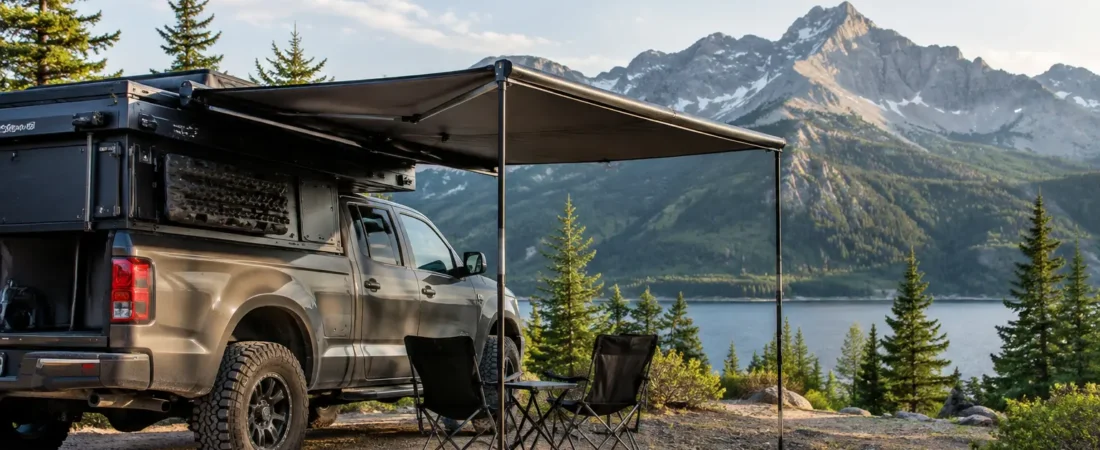
The Shadow Awning is a 270-degree style awning, meaning it wraps around the side and rear of your vehicle rather than creating one rectangular patch of shade off the side. On a truck camper setup, that shape makes a lot of sense. It can cover the area where you cook, sit, step out of the camper, or keep a cooler out of direct sun.
That extra rear coverage is the main reason to consider this style over a basic pull-out awning. A standard awning is perfectly fine for a quick lunch stop, but it can leave the back of the truck exposed right where camp activity naturally happens. The 270-degree layout feels more like setting up an outdoor living area than hanging a small roof over one chair.
We like gear that supports slower camp time instead of creating another project to manage. When you have shade over the useful part of camp, it is easier to sit outside with coffee, cook dinner without staring into the sun, or just watch the light change over a lake. That is a big deal when the point of the trip is to stop feeding the scroll for a while.
The coverage is the real selling point
The Shadow Awning’s broad footprint is what separates it from simpler awnings. It gives couples and families more flexibility with where they put chairs, tables, coolers, and camp kitchens. It also helps when a brief rain shower rolls through, although shade awnings should not be treated like fully enclosed shelters.
The exact usable area will depend on the awning version, the vehicle it is mounted to, and how you position camp. Still, the basic advantage remains the same: it covers more of the space you actually use. On a truck with a camper, that matters more than having another accessory bolted to the side.
It is built for repeated use
One reason premium awnings cost more is that they are meant to live outside on a vehicle through highway miles, dust, weather changes, and frequent opening and closing. The Shadow Awning has a hard outer case and a design intended for a more permanent vehicle installation.
That does not mean it is maintenance-free. Anything mounted outside will collect dirt, bugs, road film, and sometimes water if it is packed away wet. But a hard-case awning is generally a better fit for people who use their truck or camper regularly and do not want to wrestle with a fabric bag every time they stop.
Alu-Cab Shadow Awning Review: Setup and Daily Use
The Shadow Awning is designed to deploy quickly, and that is part of its appeal. It unfolds outward from the vehicle and uses articulated arms to create its wide arc of coverage. Once you understand the movement and sequence, it is much more approachable than it may look at first glance.
Still, this is not a one-handed, no-thought operation in every situation. Its size is the reason it works so well, but that size also means you need room alongside and behind the vehicle. Tight trailhead parking, a crowded campground loop, or a site bordered by trees can limit where you can open it fully.
That is not really a flaw. It is simply the reality of a large 270-degree awning. Before committing to one, think about the places you camp most often. If your trips are mostly quick roadside stops or cramped urban parking, a smaller side awning may be easier. If you set up camp for a night or several days, the larger footprint starts making a lot more sense.
Mounting matters more than people expect
An awning is only as solid as the rack, brackets, or camper structure holding it. The Shadow Awning has meaningful weight compared with a small bag awning, so it needs a mounting solution designed for the load and the vibration of rough roads.
This is one area where it is worth slowing down before buying. Check the compatibility of your roof rack, bed rack, topper, or camper before assuming a universal bracket will handle the job. Also consider where the awning case will sit when closed. You want it accessible without blocking doors, camper access, lights, or other gear you use often.
For truck-camper owners, placement is especially important because there are more moving parts in the overall setup. Clearance around doors, rooflines, and any rear access needs to be considered before drilling holes or ordering brackets. A clean install is not just about looks. It makes setup less annoying on every trip afterward.
Wind Is the Trade-Off You Cannot Ignore
A big awning is basically a sail when the wind picks up. The Shadow Awning may be designed to be freestanding in calm conditions, but “freestanding” should never be confused with “ignore the forecast.” Wind can arrive fast on open desert ground, along a lake, or just before an afternoon storm.
Use the supplied support legs, straps, and stakes when conditions call for them. If the ground will not accept stakes, you need another plan, such as appropriately weighted anchors. Pay attention to the direction of gusts and do not leave the awning open unattended when you head out for a hike, a paddle, or a grocery run.
This is not specific to Alu-Cab. It applies to every awning, pop-up canopy, and screen room. Large coverage is wonderful right up until a gust gets underneath it. Taking an extra few minutes to secure it is a lot cheaper than replacing an awning, repairing a rack, or explaining to your neighbor why your shade structure tried to visit their campsite.
Rain deserves the same common sense. Adjust the setup so water can run off instead of pooling on the fabric. A little attention to angle and drainage can prevent the kind of surprise that turns a calm evening into a wet scramble.
The Costs Beyond the Price Tag
The purchase price is the obvious hurdle, but it is not the only one. A Shadow Awning can add the cost of vehicle-specific mounts, installation hardware, optional walls, lighting, and storage solutions for stakes and straps. It also adds weight up high, which matters for handling, roof-load limits, and the overall balance of a build.
There is also the physical size of the case. On a full-size truck camper, it can be a reasonable compromise for the shade it provides. On a smaller SUV, Jeep, or compact trailer, it may feel more noticeable. The right choice depends on how much you value shade versus how much you want to keep the vehicle narrow, light, and simple.
For someone who camps a few weekends a year in mild weather, a less expensive awning may be the smarter move. For people who regularly travel in exposed, sunny places and want camp to feel comfortable for longer stretches, the Alu-Cab can earn its place.
Is It Worth It for Our Kind of Camping?
The Alu-Cab Shadow Awning makes the most sense when your vehicle is your basecamp. That is true for truck campers, overland rigs, teardrop trailers, and long weekend road-trip setups where you spend real time outside rather than only sleeping in the vehicle.
It has a premium price, added weight, and a setup that deserves respect in wind. In return, it provides a large covered area that can make hot, bright campsites more livable. That is a practical upgrade, not just an Instagram accessory.
If your goal is to spend more evenings outside, cook without baking in the sun, and make your truck or camper feel like a place to settle in, the Shadow Awning is worth a serious look. The best camp gear is not always the gear with the most features. Sometimes it is the piece that gives you a little more shade, a little more comfort, and one more reason to stay outside until the stars come out.