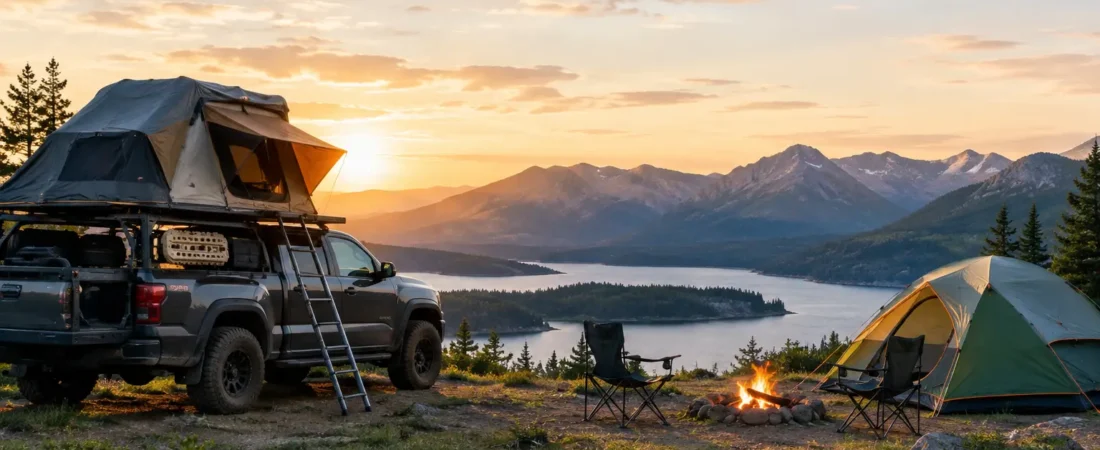
The difference between overlanding vs camping usually becomes clear around mile 40 of a rough forest road. Camping asks, “Where are we staying tonight?” Overlanding also asks, “What is around the next bend, and can our vehicle get there?” Both can lead to a great night outside, a better camp meal, and that welcome feeling of being unavailable for a while. They just put the emphasis in different places.
For us, that distinction matters because a truck camper can support both kinds of trips. Our Ram 3500 dually with a Four Wheel Camper Project M can be a comfortable basecamp for a slow lake weekend, or part of a longer route where getting there is half the point. Neither style is better. The right one is the one that gets you outside without turning your whole weekend into a stressful logistics exercise.
Overlanding vs Camping: The Simple Difference
Camping is centered on the destination. You choose a campground, state park, dispersed site, lake, or piece of family land, then set up and spend time there. The drive may be scenic, but it is usually the route between home and camp. A camping trip can be one night or a week, with a tent, truck camper, teardrop, hammock, or whatever helps you sleep comfortably.
Overlanding is centered on self-supported travel. The route is a major part of the experience, often connecting dirt roads, public land, small towns, remote trailheads, and multiple overnight stops. The vehicle carries more of the plan: food, water, recovery equipment, navigation, shelter, power, and the tools needed to deal with normal problems away from town.
That does not mean overlanding has to involve rock crawling or crossing a desert for two weeks. A two-night loop through public land in New Mexico, with a few backroads and a dispersed campsite, can qualify. It also does not mean regular camping is somehow less adventurous. Parking near a quiet Texas lake, launching kayaks, cooking dinner under an awning, and sitting around a fire pit is a pretty good use of a weekend.
Camping Is About Staying Put
The beauty of camping is that it gives you permission to stop moving. Once camp is set, the day can get simple fast: coffee, a short hike, fishing, reading, cooking something better than it has any business being outdoors, then watching the light change.
Campground camping is often the easiest entry point. There may be established pads, restrooms, water access, picnic tables, and neighbors nearby. That can be a huge benefit for families, first-time campers, or anyone who wants less uncertainty. State parks can also make an excellent base for boating, paddling, biking, and exploring local attractions without packing up every morning.
Dispersed camping shifts the experience a little closer to overlanding because it requires more independence. You need to know which land allows it, follow local stay limits and fire restrictions, pack out trash, manage human waste responsibly, and avoid creating a new campsite where one is not appropriate. Still, the goal can remain simple: find a place, settle in, and enjoy it.
Camping works especially well when the activity is the main event. If you are heading out to fish, paddle a BOTE kayak, spend time on the water, or let the kids roam around a safe campsite, there is no prize for adding three extra hours of washboard roads. A good camp spot can be the whole adventure.
Overlanding Is About the Journey
Overlanding adds movement, problem-solving, and route choices to the trip. You might wake up at one site, make coffee, break camp, travel a scenic section of dirt road, stop at a trail or overlook, and choose the next camp based on daylight, weather, road conditions, and how everybody is feeling.
That last part is more important than people admit. A route that looks fun on a map can feel very different after rain, in high wind, or when it is late and you are tired. Overlanding rewards flexibility. Sometimes the smart call is turning around, skipping a difficult section, or choosing an established campground instead of pushing deeper into public land.
Vehicle capability matters, but judgment matters more. Four-wheel drive, good tires, recovery points, ground clearance, lockers, and a winch can add options, but they do not make a muddy road predictable or a narrow trail suitable for a full-size truck. Our truck has ARB air lockers, Carli Dominator suspension, and a Carbon Offroad Pro 20K winch, but none of that changes the fact that a heavy dually and camper need room to turn around. Knowing when not to continue is a real overlanding skill.
The same goes for the Jeep. A Wrangler Rubicon X and teardrop can open up a different style of travel than a truck camper, but towing adds its own limits. Clearance, traction, turnaround space, and trailer stability all deserve a little humility. The goal is to come home with good stories, not a recovery story that gets expensive.
Self-sufficiency changes the planning
On a camping trip, forgetting ice can be annoying. On an overlanding trip far from services, forgetting water, fuel, a basic tool kit, or offline maps can change the entire plan. That is why overlanders tend to think in systems.
Power is one example. A portable battery may be enough for a short camping weekend, while a longer off-grid route requires a clearer understanding of daily power use. Our setup includes an EcoFlow Delta Pro 3 and 600 watts of Renogy solar on the camper, plus a Bluetti Elite 300. That kind of capacity is useful, but it is not magic. Shade, clouds, hot weather, inverter loads, and how often you use an AC unit all affect the math.
Water, food, and fuel work the same way. Pack for the trip you are taking, with a sensible margin for delays, rather than building a rolling warehouse for every possible situation. More gear can bring confidence, but it also adds weight, takes up space, and gives you more things to organize when all you really wanted was to watch the sunset.
The Gear Overlap Is Bigger Than People Think
Camping and overlanding share a lot of the same useful equipment: a reliable sleep setup, weather-appropriate layers, lighting, a way to cook, a first-aid kit, recovery basics for the vehicle, and a plan for waste. The difference is usually quantity, durability, and how far you will be from help.
For a campground weekend, a cooler, camp chairs, an awning, and a simple kitchen setup may be all you need. For a multi-day off-grid route, you may also want extra water storage, navigation that works without cell service, an air compressor, tire repair supplies, communications options, and a way to handle changing weather.
Comfort gear is not cheating. An Alu-Cab Shadow awning can make a hot afternoon far more enjoyable. A Dometic or ICECO cooler can keep food from becoming a science project. A Zero23 Rask shower can be a major morale boost after a dusty day. And a LavaBox propane fire pit can be a nice option where wood fires are restricted, as long as local rules allow it.
The trick is bringing gear because it solves a real problem for your trip, not because the internet made it look mandatory. Most memorable weekends are not ruined by the lack of a fancy drawer system. They are ruined by a dead battery, no dry clothes, poor route research, or arriving after dark with no backup site in mind.
Which One Should You Choose?
Choose camping when you want an easy reset, a reliable place to sleep, or more time doing one activity. It is often the better fit for a short weekend, a first trip with new gear, a family outing, or any time the point is to slow down rather than cover ground.
Choose overlanding when you enjoy route planning, changing scenery, vehicle-based travel, and the satisfaction of being prepared. It works well when the roads, remote places, and in-between stops are part of what you came for. Start smaller than your ambition suggests. One or two nights, familiar terrain, a realistic route, and a backup plan will teach you more than trying to recreate somebody else’s big expedition.
You can also combine the two. Drive a scenic route, explore responsibly, then spend two quiet nights at one camp. That is often the sweet spot: enough movement to feel like an adventure, enough stillness to remember why you left home.
The best trip does not need a label. Pick the road, campsite, lake, or trail that fits your time and comfort level, then put the phone down for a while. Stop feeding the scroll. Come camp with us and let your world slow down.