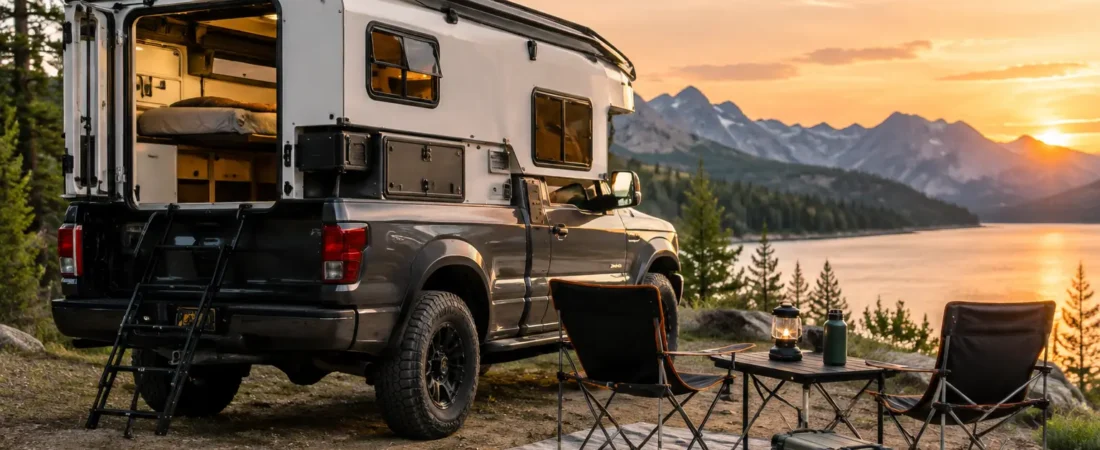
A pop-up truck camper gets you out of the weather without turning every trip into a packing puzzle – at least, that is the goal. This four wheel camper accessories guide is built around a simple question we keep asking with our Project M on a Ram 3500 dually: does this piece of gear make camp easier, safer, or more enjoyable enough to justify the space and weight?
That question matters because accessories add up fast. A camper can become a rolling gear closet before you know it, and then finding a headlamp at sunset somehow requires moving three bins, a camp chair, and one mystery bag that has been riding around since spring. The best setup is rarely the one with the most gear. It is the one that fits how you actually travel.
Start With the Trips You Really Take
Before buying anything, think about the trips on your calendar, not the ones in a far-off fantasy build. Weekend state park stays, dispersed camping, long highway runs, lake days, and backroad exploring all put different demands on a Four Wheel Camper setup.
For us, the Project M is part of a truck camping setup that needs to work across a wide range of trips. Sometimes the priority is a quiet place to cook and sleep after a long drive. Other times, we want dependable off-grid power, shade in Texas heat, or recovery equipment for roads that looked much easier on a map.
A useful way to sort accessories is by job: power, climate comfort, camp living, vehicle capability, and recovery. Buy for the job that causes friction on your current trips. If hot afternoons keep everyone inside, solve shade or cooling first. If you are constantly managing ice and melting food, focus on refrigeration. If you are already comfortable at camp but nervous on rough roads, spend your attention on tires, suspension, traction, and recovery planning.
Power That Matches Your Four Wheel Camper Setup
Power is one of the easiest places to overspend or overbuild. A basic overnight trip may only need enough energy for lights, phones, and a cooler. Add remote work, camera batteries, fans, an air conditioner, or several days away from hookups, and the math changes quickly.
Our main power setup includes an EcoFlow Delta Pro 3 and 600 watts of Renogy solar panels on top of the camper. That gives us a practical off-grid foundation for the way we camp, especially when the sun cooperates. Solar is quiet, requires little attention once it is set up, and feels like a good trade when camp is far from an electrical pedestal.
But solar is not magic. Tree cover, storms, short winter days, dusty panels, and parking in the one patch of shade you can find all affect output. Portable power stations also take up room and add real weight. We also have a Bluetti Elite 300, which gives us another flexible power option depending on the trip and what needs to be charged.
Think through your actual loads before choosing a battery system. A cooler, phones, lights, and camera batteries are a very different demand from running an EcoFlow AC unit. If air conditioning is on your list, plan the whole system around it instead of treating it like one more small appliance. Battery capacity, solar input, charging while driving, ambient temperature, and run time all matter.
Small Power Details Worth Planning
Good cable management and charging locations make a camper feel much more usable. Keep the cords you use every day accessible, protect connections from weather, and carry a few spare charging cables. It sounds boring until a phone cable quits halfway through a trip and the backup is buried beneath recovery gear.
We also like separating essential power from convenience power. Keep enough reserve for lighting, communication, and refrigeration before running the fun stuff. Camp is more relaxing when you are not staring at a battery percentage all evening.
Shade, Water, and the Part of Camp You Live In
The camper is where you sleep. The shaded space beside it is often where the day happens.
An awning is one of those accessories that can change a hot, bright campsite immediately. We use an Alu-Cab Shadow awning, and it adds useful shelter beside the truck for cooking, sitting, or waiting out a light rain. The trade-off is wind. Any awning needs to be treated with respect when gusts pick up. Secure it properly, stay aware of changing weather, and put it away before it becomes an expensive kite.
For water, storage capacity is only one part of the plan. You also need a workable way to use water outside without making a mess in the camper. Our Zero23 Rask shower is useful for rinsing off after dusty roads, muddy paws, lake days, or a sweaty hike. A quick rinse can make a small camper feel a lot more civilized.
Still, water accessories should fit your climate and travel style. In cold weather, exposed hoses and shower gear need attention. In dry areas, it is easy to use more water than expected. A simple camp wash basin, a dedicated towel system, and a habit of cleaning gear before it enters the camper can do as much for comfort as a larger water tank.
Cooling and Cooking Without the Ice Chase
A dependable cooler or fridge is a major quality-of-life upgrade for truck camping. We have used both a Dometic cooler and an Iceco cooler in our setup. The right choice depends on how much food you carry, how long you stay out, available power, and where the unit can ride securely.
The biggest consideration is not just cooler size. It is access. A cooler that blocks the aisle, requires unloading half the truck to reach, or has no ventilation around it will become annoying fast. Measure before you buy, then think about how you will grab drinks, cook dinner, and restock groceries when camp is already set up.
Cooking accessories deserve the same filter. Bring tools that help you make meals you actually enjoy, not a kitchen drawer full of gadgets that see daylight once a year. A reliable stove, a good knife, a cutting surface, a simple cleanup system, and enough light near the cooking area go a long way.
We also use a LavaBox stainless steel propane firepit. It gives us a contained campfire option where it is allowed and conditions make sense. Always check local restrictions, fire conditions, and campground rules before bringing any fire source into camp. A propane firepit may be convenient, but it does not override a burn ban.
Vehicle Accessories That Support the Camper
A camper changes how a truck feels, handles, stops, and rides. Accessories that improve vehicle control and capability often matter more than adding another storage pouch inside the camper.
Our Ram has Carli Full Dominator suspension and ARB air lockers. Those are serious build choices, and they are not necessary for every Four Wheel Camper owner. But they reflect a broader point: match the truck to the routes you plan to drive with the camper loaded.
Suspension, tires, alignment, payload, braking, and weight distribution are all connected. If you are mostly on pavement and maintained forest roads, a simpler setup may serve you well. If you regularly travel rough, remote roads, invest in a thoughtful vehicle foundation before chasing cosmetic upgrades.
Lighting can also improve camp setup and nighttime visibility when used responsibly. We run Baja Designs ditch lights, Rigid front bumper lighting, and Oracle rock lights. Each has a different job, but none should be used as an excuse to light up a quiet campsite or blind oncoming traffic. Aim lights correctly, use them only where appropriate, and remember that darkness is part of why many of us are out there.
Recovery Gear Is a System, Not a Winch Purchase
Recovery equipment earns its place long before you are stuck. It starts with choosing routes honestly, checking conditions, understanding your vehicle, and knowing when to turn around.
We have a Carbon Offroad Pro 20K winch, but a winch is only one part of a recovery plan. The truck needs appropriate recovery points, and the people using the equipment need to understand safe rigging, load ratings, communication, and the forces involved. If you are new to recovery, hands-on instruction is worth more than a pile of shiny gear.
Carry the basics that fit your rig and use them correctly: rated recovery points, gloves, a recovery strap or kinetic rope suited to the task, soft shackles or properly rated hardware, traction boards, a shovel, and a tire repair and inflation plan. That is one of the few places where a list is helpful because each item handles a different problem.
Air lockers, traction boards, and a winch can be useful, but they can also tempt people farther into trouble. The best recovery story is usually the one where you aired down appropriately, watched the weather, and turned around before a muddy road became an all-day project.
Do Not Forget Security and Storage
Small items create the most clutter in a pop-up camper. Use soft bags, labeled bins, and dedicated homes for categories like cooking, recovery, electrical gear, and personal items. The goal is not social-media-perfect organization. The goal is being able to find a rain jacket without unloading camp.
Secure heavy gear low and close to the truck’s center when possible. Portable batteries, coolers, tools, and recovery equipment should not become projectiles on a rough road. Check tie-downs regularly, especially after washboard roads.
It is also smart to think about what stays with the truck and what comes into camp. A compact grab bag for keys, wallet, headlamps, first aid items, and charging essentials keeps the little things from wandering off between the cab, camper, and picnic table.
Let Your Setup Earn Its Keep
The best Four Wheel Camper accessory is often the one that gives you more time outside and less time managing stuff. Start with the pain points you already have, add gear slowly, and take notes after each trip. You will learn more from one slightly messy weekend than from months of scrolling through perfect builds.
Camp does not need to be complicated to be good. Set up what helps you settle in, leave behind what only creates work, and give yourself enough room to sit under the awning after dark and let the world slow down.