A good camping trip for two usually does not need a huge itinerary, a 4 a.m. trailhead alarm, or a campsite that looks like it belongs on a postcard. It needs a little breathing room. Couples camping trips work best when both people get to leave daily life behind without one person becoming the trip planner, camp cook, navigator, gear hauler, and professional finder of the missing headlamp.
That sounds obvious, but it is easy to forget when you are loading a truck on Friday afternoon and trying to beat traffic. The best trips tend to have a simple goal: get outside, get comfortable enough to stay awhile, and give yourselves fewer reasons to look at a screen.
Start Couples Camping Trips With the Same Idea of Fun
Before choosing a destination, talk about what each of you wants from the weekend. One person may picture a quiet site, coffee under an awning, and a good book. The other may want to fish at daylight, run a forest road, or put kayaks in the water. Neither is wrong. The trouble starts when those expectations only show up after camp is set.
A quick conversation can keep the trip from turning into a debate beside the cooler. Decide whether this is a driving trip, a camp-all-day trip, or a mix of both. Talk about how remote you want to be, whether you are comfortable with no hookups, and how much weather you are willing to deal with. If one person needs a solid bathroom plan and the other is happy with dispersed camping miles from town, that is useful information to have before departure.
For a lot of couples, the sweet spot is one primary destination with one optional activity. Find a camp area, settle in, then choose between a hike, fishing, kayaking, a scenic drive, or doing absolutely nothing. A schedule with too many must-dos can make the outdoors feel suspiciously like work.
Comfort Is Not Cheating
There is a strange idea that camping only counts if everybody is uncomfortable. We are not buying it. A better mattress, a warm layer, cold food, shade, and enough power to handle the basics can make more people want to camp again. That seems like a pretty good outcome.
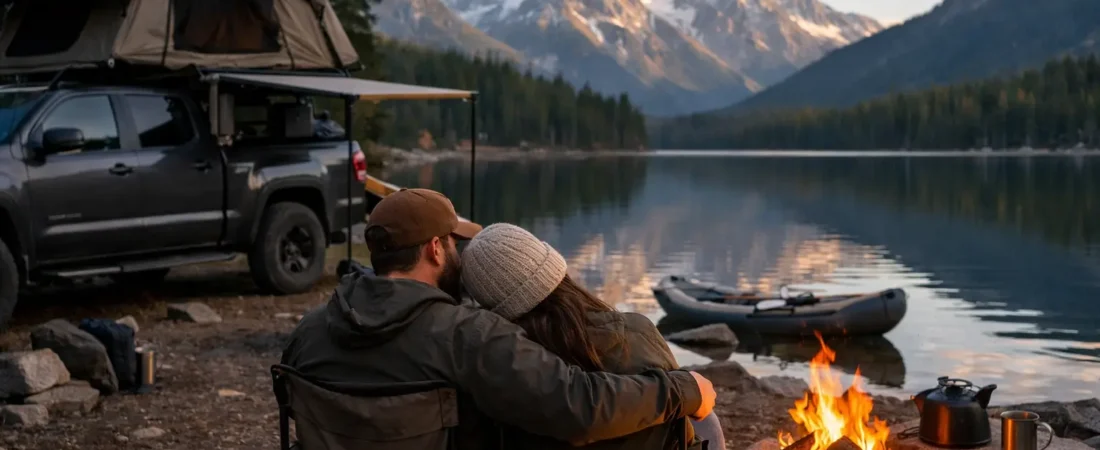
Our truck camping setup is built around that kind of practical comfort. The Four Wheel Camper Project M on our Ram 3500 dually gives us a protected place to sleep and a straightforward base camp. Solar panels and portable power help with the small things that make a stay easier, while an awning gives us a place to sit when the sun is doing Texas sun things.
Your setup does not need to look like ours. A tent, a teardrop trailer, a truck bed, or a simple cabin near a lake can all work. What matters is knowing what helps both people relax. For some couples, that is a proper camp chair and shade. For others, it is an insulated cooler, a fan, dry socks, and the ability to make coffee without a major production.
Comfort also has a practical side. Check nighttime temperatures, wind, and rain before leaving. Bring sleep gear that works for the coldest expected part of the night, not just the pleasant afternoon forecast. Keep rain gear handy instead of buried beneath every tote you own. The little stuff is what keeps a surprise weather change from becoming the entire story of the trip.
Build a Camp That Lets You Hang Out
The best camp setup makes it easy to be together without requiring constant effort. Put chairs where there is a view or shade. Keep snacks, water, and the cooler within reach. Set up lights that are useful but not bright enough to turn camp into a parking lot.
We like camp arrangements that encourage the slow part of the day. Make dinner, listen to the breeze, watch the lake change color, and let the next activity be optional. A propane fire pit can be a helpful choice where local rules allow it, especially when wood gathering is prohibited or a campground does not permit ground fires. Always check current fire restrictions, because they can change quickly and the rules matter more than camp vibes.
Share the Work Before It Becomes a Chore
Camping has chores. Gear needs to be packed, meals need to be made, trash needs to be handled, and somebody eventually has to deal with the muddy shoes. The goal is not to eliminate every task. It is to avoid silently assigning all of them to one person.
A simple division of responsibilities helps. One person can handle route planning and fuel, while the other organizes food and the campsite essentials. At camp, one person might start dinner while the other gets chairs, lighting, and sleeping space ready. Switch it up sometimes, especially if one person is always doing the same invisible jobs.
The same goes for packing. Keep a shared checklist, but do not make it 47 pages long. Focus on the things that can end a trip early: shelter, bedding, water, food, a way to cook, weather layers, navigation, first aid, and any permits or reservation details. Then add the items that make your particular trip enjoyable, whether that is fishing gear, a BOTE kayak, a camera, or ingredients for a better-than-necessary breakfast.
Pick Food That Leaves Time for the Good Part
Camp cooking is memorable when it is simple enough to enjoy. A complicated meal can be fun on a long stay, but on a two-night trip it may leave one person chopping vegetables while everyone else is already relaxing.
Plan one easy arrival-night dinner, one meal you are genuinely excited about, and breakfasts that do not require a sink full of dishes. Prepping a few ingredients at home is not less outdoorsy. It is just smart. Tacos, sandwiches, foil packets, grilled sausages, breakfast burritos, and skillet meals all make sense because they are flexible and easy to clean up.
Bring more water than you think you will need, especially in hot or dry country. Drinking water is only part of it. You may need it for cooking, washing hands, cleaning up, and pets if they are along for the ride. If you plan to use a remote site, know your water plan before you get there.
Make Room for Separate Interests Too
Being together outdoors does not mean doing every single thing side by side. In fact, a good trip can include a little healthy independence. One person might cast from shore while the other reads in camp. Someone may take the kayak out for an hour while the other makes lunch or takes a nap.
That is especially true around lakes. A day on the water can be as active or as lazy as you want it to be, but weather, wind, water temperature, and boat traffic all deserve attention. Wear the right safety gear, respect local rules, and do not let a beautiful day convince you to ignore changing conditions.
The point is not to manufacture constant couple time. It is to trade the usual distractions for the kind of time where conversation happens naturally. Sometimes that comes around a campfire. Sometimes it happens during a quiet drive down a gravel road. Sometimes it is just sitting near each other without anybody needing to fill the silence.
Choose the Right Amount of Adventure
There is a difference between a trip that feels pleasantly remote and one that becomes stressful because the route, weather, or vehicle demands are beyond your comfort zone. Couples camping trips are not the best place to prove anything.
If you are new to dispersed camping or overlanding, start with a location that has a reliable route in, cell service nearby, and a clear backup option. Tell someone where you are going. Download maps before losing signal. Carry recovery gear that matches your vehicle and know how to use it, but do not treat recovery equipment as permission to push deeper into bad conditions.
For truck campers, trailers, and larger vehicles, route research matters even more. A road that is easy for a small SUV may have tight turns, low branches, soft shoulders, or a turnaround problem for something bigger. Rain can change a dirt road fast. Turning around early is not a failure. It is usually the move that gets you home with a story you are happy to tell.
Leave Space for the Unplanned Part
The trips we remember are rarely perfect. Wind may change the plan. A favorite overlook may be crowded. Dinner may be later than expected because you took the longer scenic route. That is normal.
Bring a backup campsite or nearby alternative, but avoid trying to control every hour. A little flexibility is the whole point. At Land or Lake, we are always drawn back to the simple version of outdoor travel: no plans, no scripts, good times, long clips.
Put the phones away when you can. Take a few photos if you want them, then look at the actual view. Make the coffee. Sit outside after dark. Couples camping trips do not need to be dramatic to matter. Sometimes the best part is simply remembering that your life can move at a slower pace for a while.