
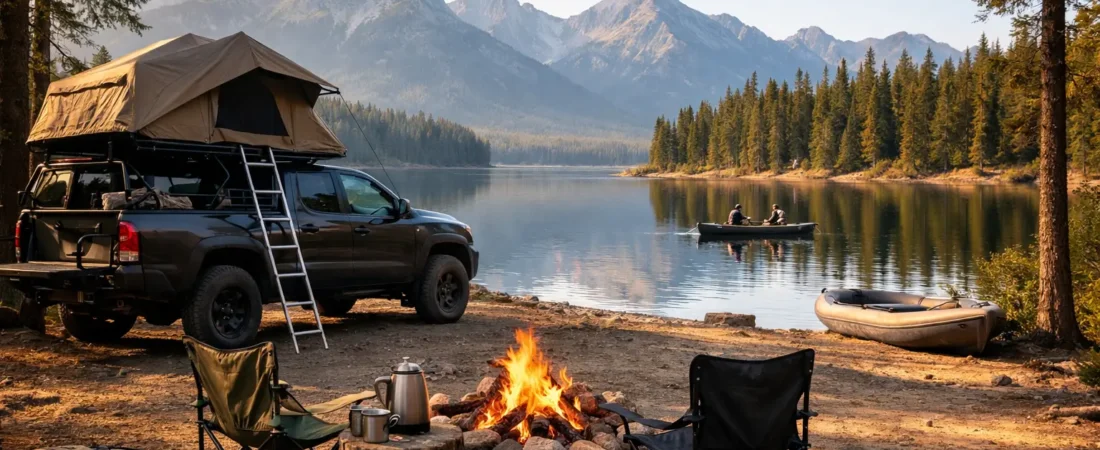
The phone usually comes out before the camp chairs do. A quick weather check turns into a text reply, then a reel, then somehow you are standing next to a perfectly good sunset with your head still somewhere else. A digital detox camping trip is not about pretending phones are evil or leaving without a map. It is about deciding that the screen is a tool for the trip, not the place where the trip happens.
For us, the goal is not to make camping feel like a self-improvement assignment. We still like a good trail map, weather radar, photos, and the comfort of knowing we can reach someone if plans change. But there is a real difference between using a phone with intention and feeding the scroll from the passenger seat, at the fire, and in bed. A few simple boundaries can give a weekend outside the slower rhythm most of us were looking for in the first place.
Start Your Digital Detox Camping Trip Before You Leave
The easiest way to lose a phone-free camping plan is to arrive unprepared. If every campsite detail, reservation email, trailhead direction, fishing license, and dinner recipe lives in one app, the phone has a pretty good argument for staying in your hand.
Take care of the useful stuff at home. Download offline maps for the drive and nearby hiking or dispersed-camping roads. Screenshot reservation details and gate codes. Save emergency contacts, confirm the forecast, and tell a family member roughly where you expect to be. If you are traveling into remote country, know what communication options you have before service disappears. A digital detox should never mean being careless about safety.
It also helps to set expectations with the people coming along. “No phones” can feel overly strict, especially for parents, people on call for work, or anyone using a phone as a camera. Try a more realistic agreement: phones stay put away during meals, around the fire, on hikes, and for the first hour after waking up. Check messages once in the afternoon if needed, then put them back down.
That small amount of structure matters. Without it, the group usually defaults to whatever everyone does at home. And at home, the phone is almost always within reach.
Pick a Camp Setup That Makes Presence Easier
You do not need to camp in a tent twenty miles from the nearest paved road to unplug. A state park site, a lake weekend, a forest road pullout where it is legal to camp, or a quiet campground can all work. The right place depends on your comfort level, your vehicle, the weather, and how much uncertainty sounds fun versus annoying.
A remote site can remove the temptation of constant notifications because there may not be any signal. The trade-off is that remote camping asks more of you. You need a dependable plan for water, navigation, weather changes, road conditions, recovery, and emergencies. If you are new to dispersed camping, a developed campground may actually create more space to relax. You can spend less energy figuring out logistics and more time listening to the trees, the water, or your buddy trying to start a fire with damp wood.
Comfort also counts. If everyone is cold, hungry, bored, or dealing with a dead battery they genuinely need, the phones come back out fast. Bring the gear that helps your group settle in, but do not turn camp setup into a production.
Our Project M setup on the Ram 3500 dually gives us a practical middle ground for this. With solar on the roof and power available through our EcoFlow Delta Pro 3, we can keep essentials charged without relying on a campground hookup. That means camera batteries, lights, and a cooler can have a place in the plan without turning the camper into a rolling living room. Power is useful. Constant entertainment is optional.
Make the Phone Less Convenient Than Camp
Willpower is a flimsy piece of camping gear. Put a phone on the camp table and someone will check it every time there is a quiet moment. Put it in a drawer, glove box, dry bag, or the camper, and that little pause has a chance to become something else.
Before you leave, turn off nonessential notifications. Consider using Do Not Disturb with exceptions for close family or emergency contacts. Remove social apps from the home screen, log out for the weekend, or use an app limit if you know you will ignore your own good intentions by Saturday morning. There is no prize for making this harder than it needs to be.
Bring a separate camera if photos are a big part of the trip. A phone camera is convenient, but it also puts an entire internet casino in your palm every time you want a picture of the lake. Even deciding on a few photo windows works well: shoot camp setup, take a few photos at golden hour, then let the rest of the evening belong to your actual eyeballs.
If you need a phone for navigation, keep it in navigation mode. If you need it for weather alerts, check it deliberately. The point is not zero screen time at any cost. The point is stopping the reflexive checks that split your attention into tiny pieces.
Give Your Hands Something Better to Do
A quiet camp can feel strange at first. We are used to filling every spare minute, even the good ones. The best antidote is not a packed schedule. It is having a few low-effort ways to enjoy the time that do not require a signal.
Camp cooking is an easy one. Make a meal that takes a little participation instead of opening something and disappearing into a chair. Prep fajitas, cook breakfast slowly, make coffee without rushing, or put together a simple snack board after a paddle. The food does not need to be fancy. It just needs to create a reason to hang around the camp table and talk.
Water changes the pace, too. A calm paddle in a BOTE kayak, an unhurried morning of fishing, or an evening on the lake can make a phone feel irrelevant for a while. So can a short hike, a drive down a scenic back road, a game of cards, a book, or doing absolutely nothing in a camp chair. That last one can be surprisingly difficult for people who have trained themselves to reach for a screen at the first sign of stillness.
Bring a paper map, a field guide, a deck of cards, a notebook, or binoculars. None of these are revolutionary. That is kind of the point. A digital detox does not need a complicated replacement system. It needs room for ordinary things to become interesting again.
Keep One Safety Lane Open
Going offline is different from becoming unreachable. Conditions can change quickly outdoors, especially with storms, fire restrictions, changing water levels, rough roads, or a mechanical problem. Keep enough battery and a clear communication plan for the type of trip you are taking.
For some trips, that may mean a charged phone and offline maps. For remote travel, it may mean additional emergency communication equipment and a more detailed plan shared with someone at home. Check local rules before heading out, respect closures and fire restrictions, and do not assume a map label means a road is passable for your vehicle.
This is also where camp power becomes practical rather than excessive. Charging a phone once a day for safety, running necessary lights, or keeping weather information available does not ruin the reset. The goal is to remove needless noise, not the tools that help you make good decisions.
Let the First Day Be a Little Awkward
The first few hours may not feel peaceful. You might feel the urge to document everything, check what you missed, or look up some random question that absolutely does not need an answer before breakfast. That is normal.
Give it time. Let camp setup take as long as it takes. Let the fire burn down. Let a conversation wander without someone fact-checking it. Notice how long an evening can feel when nobody is trying to make it disappear.
A good digital detox camping trip is not measured by whether your phone stayed powered off for 48 straight hours. It is measured by whether you came home remembering the smell of dinner, the sound of water against the shore, the ridiculous thing someone said by the fire, and the fact that you did not need to post any of it for it to count. Stop feeding the scroll. Come camp with us and let your world slow down.